Modern living has reshaped how we use our homes. A single space now supports work, rest, connection, and quiet moments with nature. To make this lifestyle feel effortless, interior space planning tips and principles become the backbone of a well-functioning home, shaping how each area works together without feeling crowded or forced.
At Manon Design Studio, we see interior space planning as a quiet art. When circulation feels natural, proportions are balanced, and every area has a clear purpose, helping daily activities unfold smoothly while enhancing comfort and clarity.
In the article, we share our approach to space-planning interior design, drawn from real projects and human-centered thinking, to help you create a modern home that feels refined, adaptable, and deeply connected to how you live.
Ready? Here we go!
Interior Space Planning Tips by Manon
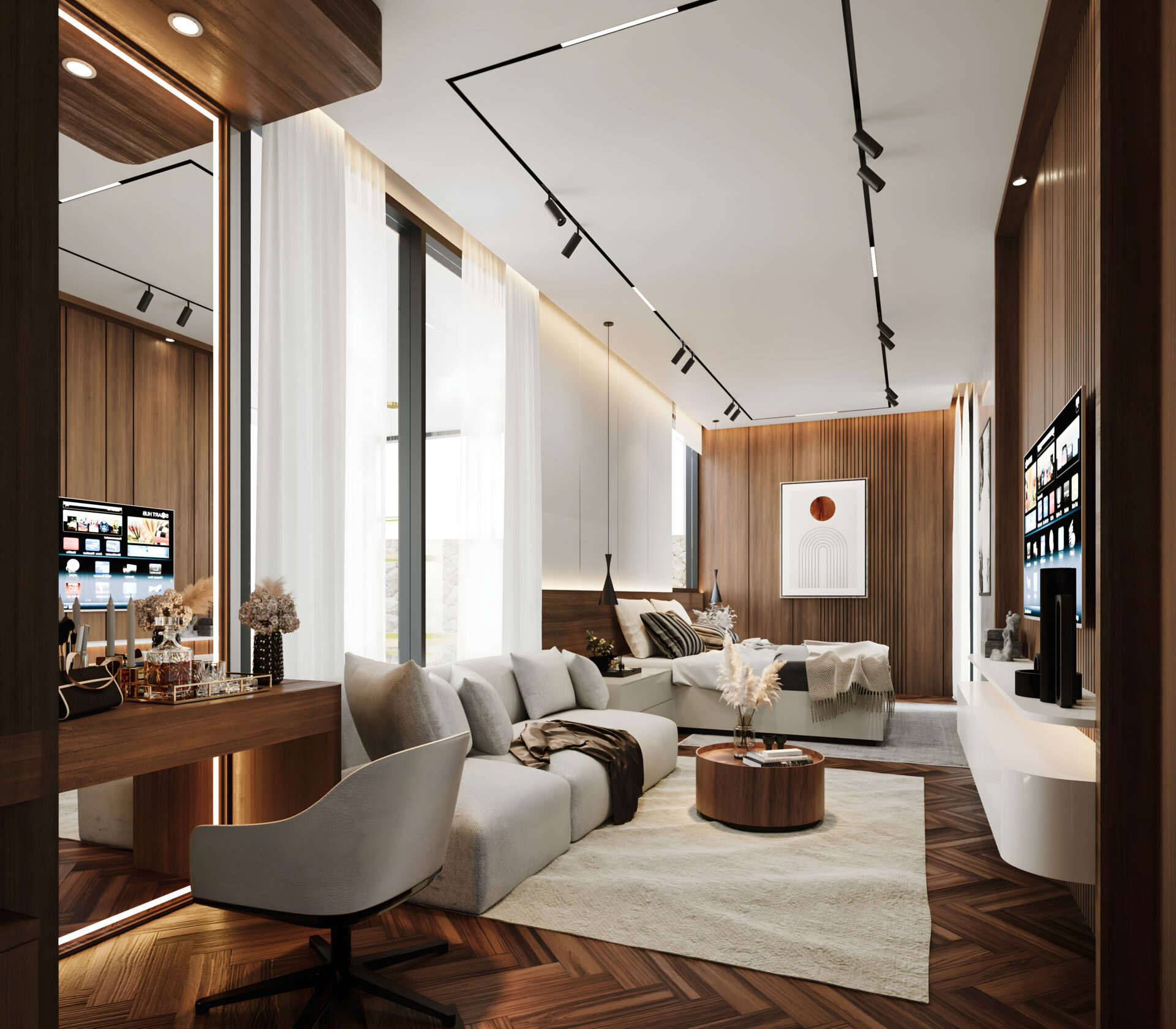
1. Clarify What the Space Should Deliver
Good design begins with understanding why a space exists.
Purpose is not just functionality; it is emotional intention. Before sketching layouts or choosing furniture, take time to reflect on what you want each room to offer. Should it be calming? Energizing? Social? Private?
Ask yourself:
- Does this space need to support multiple activities?
- Will it be used more during the day or at night?
- What daily routines should it make easier or more enjoyable?
Purpose is the compass that guides all design decisions. These interior space planning tips begin with purpose — allowing your design to support your lifestyle rather than work against it.
For example, a living room designed as a relaxation zone will have an entirely different layout compared to one built for entertaining guests. Meanwhile, a workspace requires thoughtful positioning for natural light, acoustic comfort, and minimal distractions.
Also Read: How Story-Driven Design Property Enhances Real Estate Value
2. Create Clear, Comfortable Circulation
Circulation is a key part of interior space planning because it shapes how people move through a space and how comfortable it feels.
In architecture and design, circulation refers to the pathways people take—such as between furniture and functional areas—so movement feels intuitive, smooth, and unobstructed.
Good circulation enhances comfort, efficiency, accessibility, and overall user satisfaction. People should be able to move through a room naturally, without bumping into furniture or navigating tight corners. Clear walkways and properly spaced furniture prevent bottlenecks and make the space feel open and inviting. That is why smooth transitions between areas help unify the design, reduce visual clutter, and support a calm atmosphere. (National Library of Medicine, Journal of Environmental Psychology, 2022)
3. Use Smart Zoning to Balance Open Spaces and Functionality
Zoning transforms a room from a space into an intentional sequence of experiences. Zoning keeps the home organized and emotionally layered, which is especially important in modern life.
Effective zoning does not require physical walls. Instead, consider using:
- Rugs to subtly anchor activity zones.
- Pendant lights or floor lamps to introduce a shift in mood.
- Open shelves or indoor greenery as soft dividers.
- Texture changes, like wood, stone, or soft fabrics, to mark transitions.
Our dedicated designers craft zoning with a focus on rhythm. We design spaces that remain visually connected but still offer distinct functions, allowing modern living to feel fluid rather than chaotic.
4. Choose Furniture That Supports Space
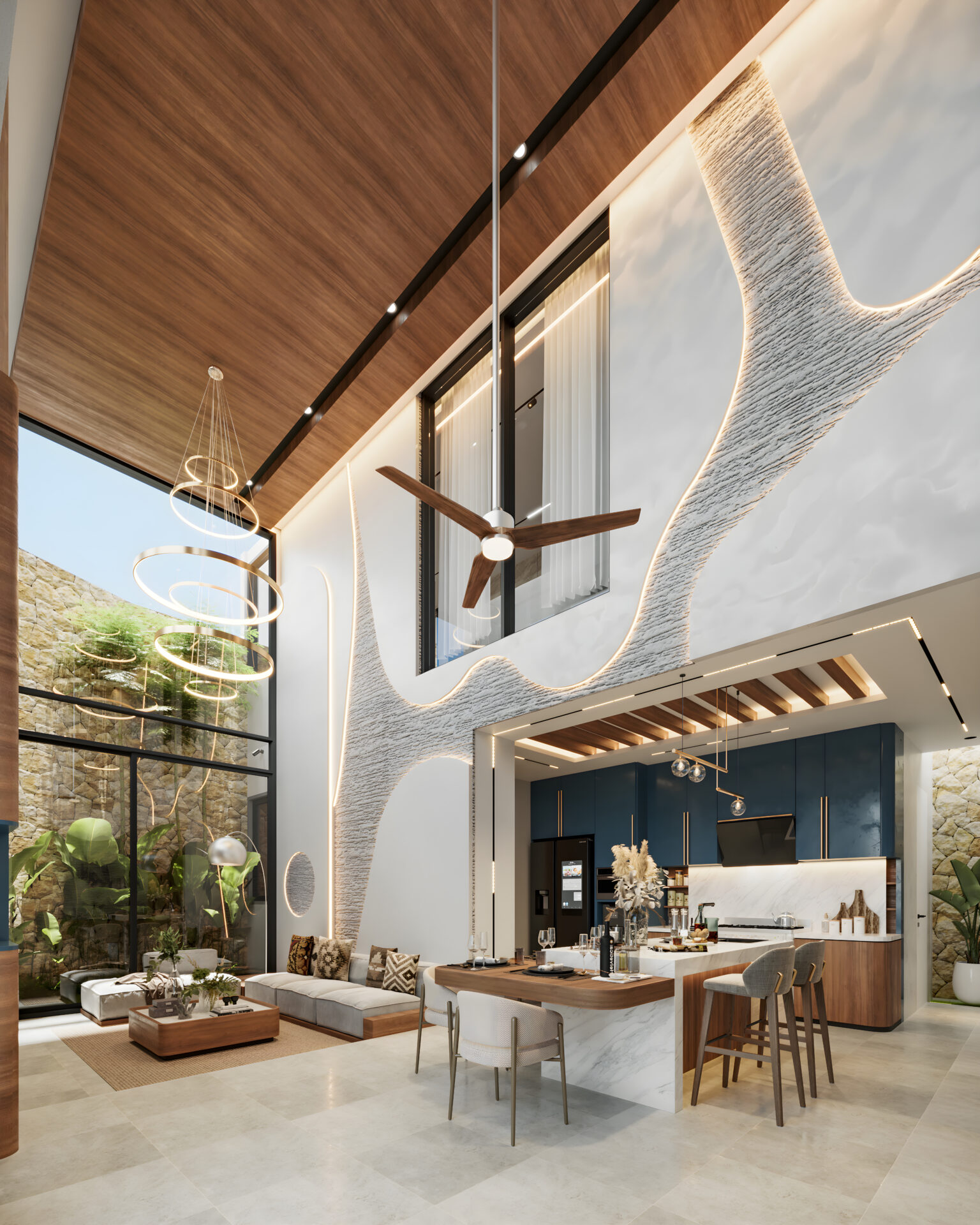
Furniture selection plays a crucial role in space planning interior design. Choosing the right proportions is essential:
- Too large makes the room feel cramped
- Too small may make it feel unbalanced
Measuring your space before selecting pieces ensures smooth circulation and comfort throughout the room.
However, prioritizing multi-functional furniture, like modular sofas or storage benches, adds flexibility to your design, adapting easily to changing needs. Sleek, floor-to-ceiling storage keeps floors clear, while furniture with exposed legs and lighter colors creates a sense of openness.
Thoughtful furniture choices are among the most practical interior space planning tips you can apply — maintaining a clean, spacious, and modern atmosphere. This is where our interior design service in Bali truly stands out, bringing your vision to life through thoughtful, high-quality design.
5. Bring the Space Alive With Light, Layers, and Meaningful Focal Points
At Manon Design Studio, interior space planning is about how our clients' spaces are actually lived in — not just how it looks.
In dense tropical contexts, where villas and houses sit close to one another and indoor–outdoor living defines daily life, furniture scale, circulation, and visual clarity become critical.
For example, in our recent ZZA Umalas Villa project, we found that generous floor area alone did not guarantee comfort. The living space felt heavy and disconnected from the garden until furniture proportions were recalibrated and circulation paths were cleared.
Source: https://manondesignstudio.com/
This approach is supported by research such as “Impact of Layout Design on Visual Comfort and Daylight Performance in Residential Buildings” (Building and Environment, Elsevier), which shows that open layouts with clear circulation significantly improve perceived spaciousness and daylight quality in warm climates.
Specifically, Bali villas are also increasingly designed for long stays, not short holidays. According to the UN World Tourism Organization, extended-stay travelers prefer residential-style environments that can adapt throughout the day.
This space planning interior design aligns with findings in “Tourism and Accommodation Trends Toward Longer Stays” (UNWTO), reinforcing the value of multi-functional furniture and flexible living zones.
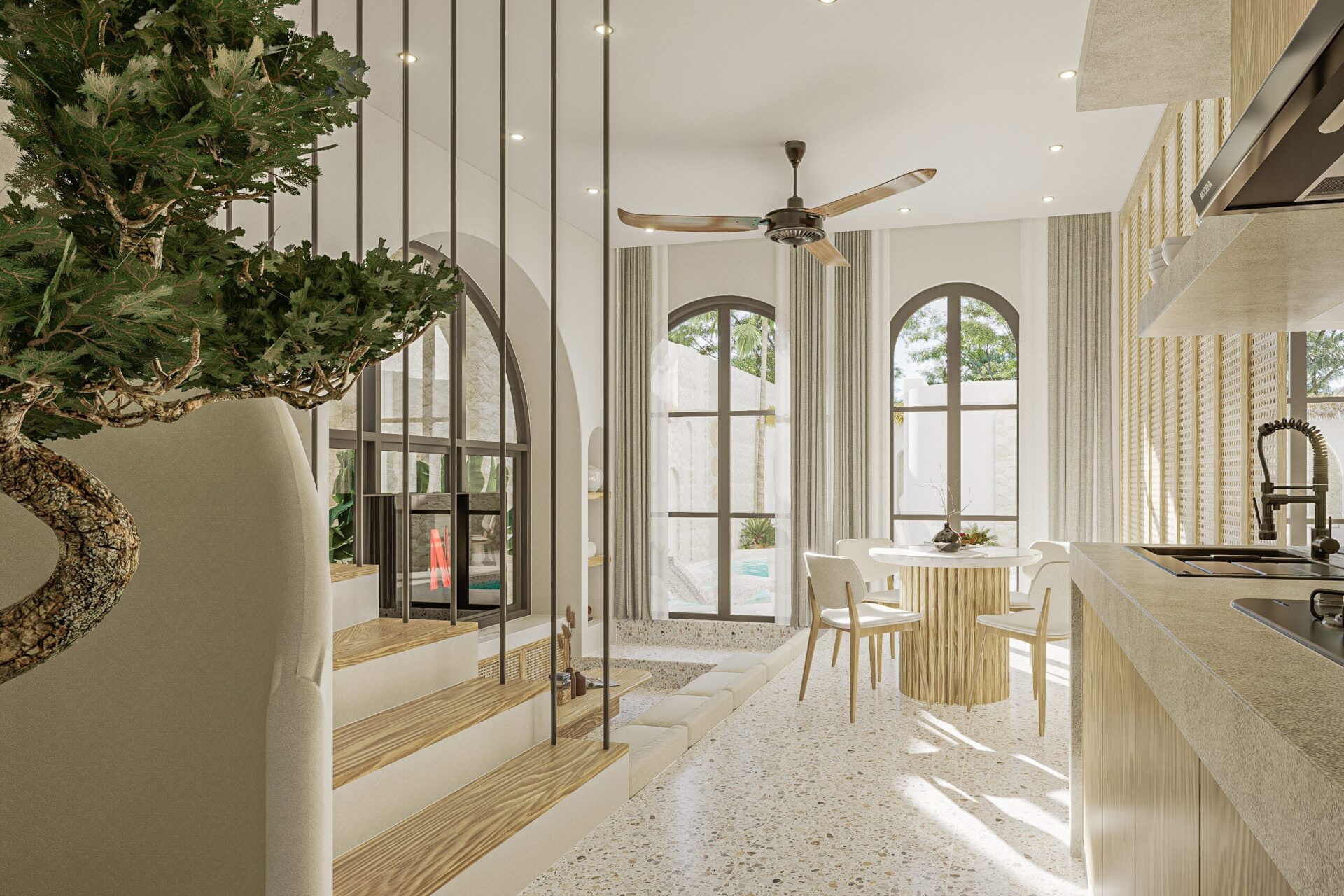
In this space planning interior design, to maintain visual lightness, Manon prioritizes low-profile furniture, exposed legs, and integrated storage that absorbs clutter into the architecture.
This strategy echoes principles discussed in “The Built Environment and Mental Health” (World Health Organization), which highlights how visually coherent, uncluttered interiors support emotional well-being and daily comfort.
Rather than relying on decoration, we define one or two meaningful focal points — often a framed garden view, a material feature, or a lighting moment — allowing light, shadow, and nature to animate the space.
Source: https://manondesignstudio.com/wp-content/uploads/2024/07/10-6.jpg
When space planning, interior design, and context align, interiors feel calm, breathable, and deeply livable, a necessity for modern Bali villas and houses designed around everyday life, not just first impressions.
Also Read: Master Plan Architecture for Future Urban Spaces
Let’s Design Your Modern Living With Manon!
We truly understand that things that happened around today’s design landscape, traditional spatial needs are shifting. Homes and villas are no longer just places to rest — they are multi-purpose environments that support living, working, and leisure under one roof.
Globally, average dwelling sizes have been shrinking; for example, average UK homes in 2021 were smaller than those in the early 2000s, driving demand for smarter, multifunctional interior planning. This reflects a broader compact living trend, where flexible use of space is essential to meet modern lifestyle needs.
Parallel to this, the rise of hybrid work — a mix of remote and in-office patterns — is reshaping residential design priorities.
A 2025 global study by IWG and Arup found hybrid work can boost productivity by around 11%, with employees reporting higher satisfaction when working locally, closer to home, underscoring the demand for integrated home workspaces within living environments. Research published in Buildings (MDPI) further highlights that thoughtful home-office design improves productivity and privacy, which are the key considerations when the home becomes both workplace and sanctuary.
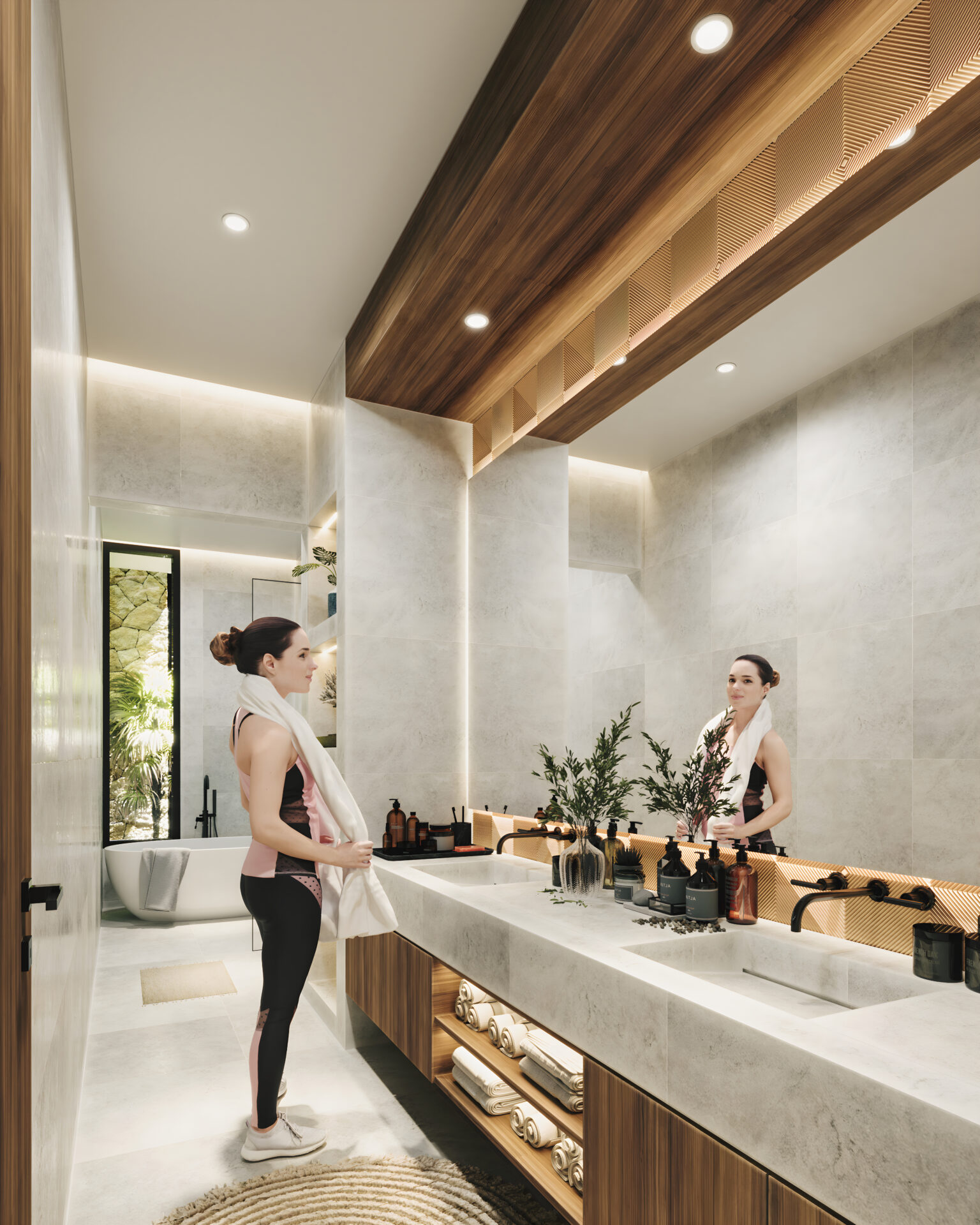
Together, these trends illustrate why contemporary space planning cannot be one-dimensional.
In Bali’s context — where indoor–outdoor living, villa culture, and hybrid lifestyles intersect — integrating spaces that shift fluidly between rest, work, and social life is not just desirable; it is essential. Seen through this lens, effective space planning and interior design become a strategic response to real human behavior, climate, and cultural lifestyle, not just an aesthetic choice.
If you are ready to create a space that truly reflects you, whether you are building a new home, renovating an existing one, or designing a modern tropical villa, Manon Design Studio is here to help you!
Connect with us today or send us messages for personal guidance, and let’s begin your transformation NOW!