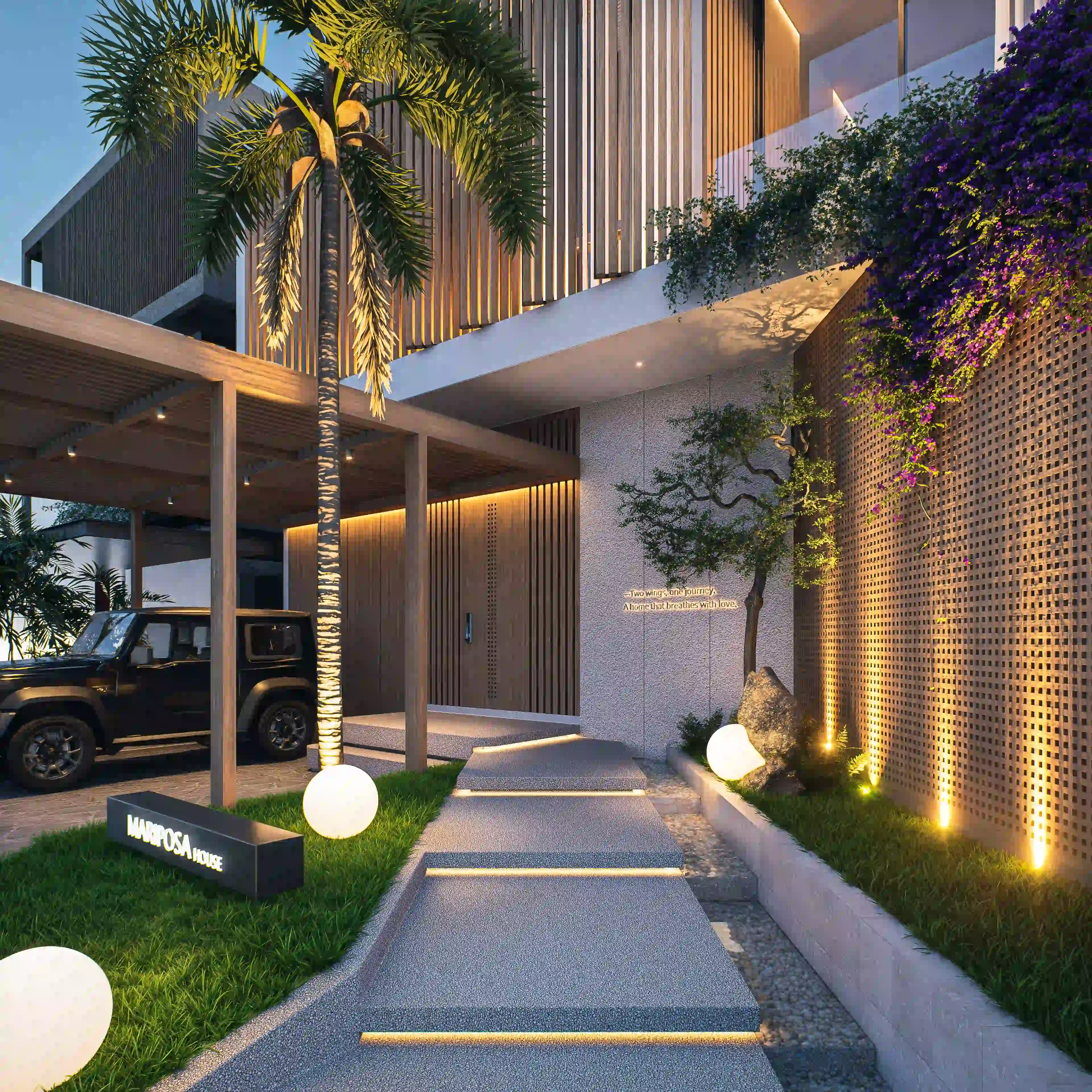
Have you ever stepped into a beautifully designed home or commercial space that looked perfect in photos but felt strangely uncomfortable once you were inside? Maybe a sofa blocked the natural walking path, a stylish kitchen felt disconnected from the rest of the home, or a large open room still made everyday tasks feel inconvenient.
Situations like these show why understanding how to create functional layouts is so important. True design is not just about stunning visuals; it is about making every area flow naturally, supporting daily routines, and turning each room into a place that feels effortless to use.
We understand that true design success is not about first impressions; it is about creating spaces that effortlessly support your life every single day.
So let’s talk through this together, clearly, simply, and honestly!
How to Create Functional Layouts That Truly Work
Before we jump into how to create functional layouts, let’s get clear on what “functional” really means. It is not about complicated designs or squeezing in as many rooms as possible.
A functional layout just works, making daily life easy and natural, flowing smoothly as your needs change, and balancing comfort with smart use of space. In short, it is about getting the most out of every corner with minimal effort.
Here is how our team at Manon creates our clients’ spaces and makes it work for them:
1. Start With Life, Not Floor Plans
One of the most common mistakes in layout design is starting with drawings rather than real behaviour. Functional layouts are shaped by how people live, not how rooms are traditionally named. When we begin planning, we ask questions that reveal patterns rather than preferences.
We look closely at:
- How the day begins and how it winds down
- Where people naturally come together
- Which moments require calm, and which benefit from energy?
At Manon Design Studio, we design around habits, not assumptions. When a layout reflects real life, it feels instinctive, even on the busiest days. And projects like Villa Volcano Whisper are one of the greatest examples of how to create functional layouts without being too much.
2. Think in Zones, Not Just Rooms
Modern homes no longer serve a single purpose. They host guests, support work, offer retreats, and frame daily rituals. That is why understanding how to create functional layouts means thinking in zones rather than isolated rooms.
Because well-designed layouts clearly organize these things, including:
- Public zones for connection and social interaction
- Semi-private zones for work or transition
- Private zones dedicated to rest and recovery
When these zones are thoughtfully arranged, the home flows seamlessly, with no overlap, confusion, or wasted space.
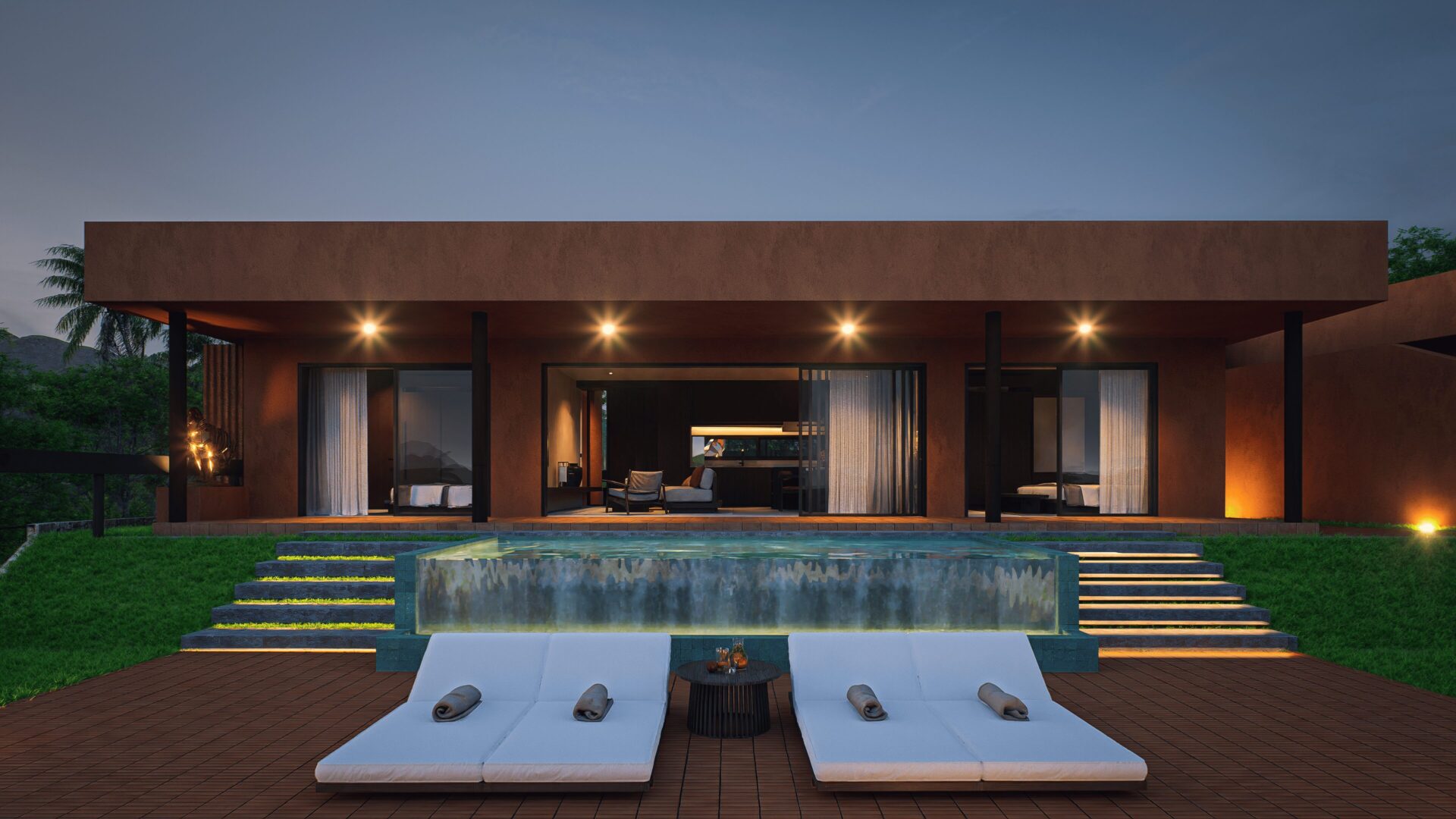
From our internal project, you can learn this part of how to create functional layouts from our experienced designers.
The villa’s volcanic-inspired design follows the island’s natural contours, letting nature take the lead. Every room is positioned to capture sweeping views of the ocean and distant volcano, making the horizon feel like part of the home itself.
At Villa Volcano Whisper, staying is not just about a place to sleep; it is about listening to the land, feeling the wind, and sensing the quiet pulse beneath your feet. Here, silence has texture, and the horizon changes color with every hour, guiding your moments of calm.
From our lenses, we built this property where each space is crafted to help our clients’ tenants slow down and reconnect—with themselves, with nature, and with the rhythm of island life. Whether it is a morning swim in a private pool, an afternoon lounging on a sunlit terrace, or simply breathing in the volcanic air, the villa invites wellness at every turn.
“We did not create a place that feels just a stay, we help our clients to build a retreat for their body, mind, and spirit.” - Manon team.
3. Circulation: The Invisible Flow That Shapes Your Space
You rarely notice good circulation until it is gone. A functional layout answers a straightforward question: Can you move through the space with ease?
Clear paths, natural transitions, and zero pointless detours create movement that feels instinctive.
Also Read: Architectural Character: The Soul of Space
4. Let Light and Air Guide the Layout
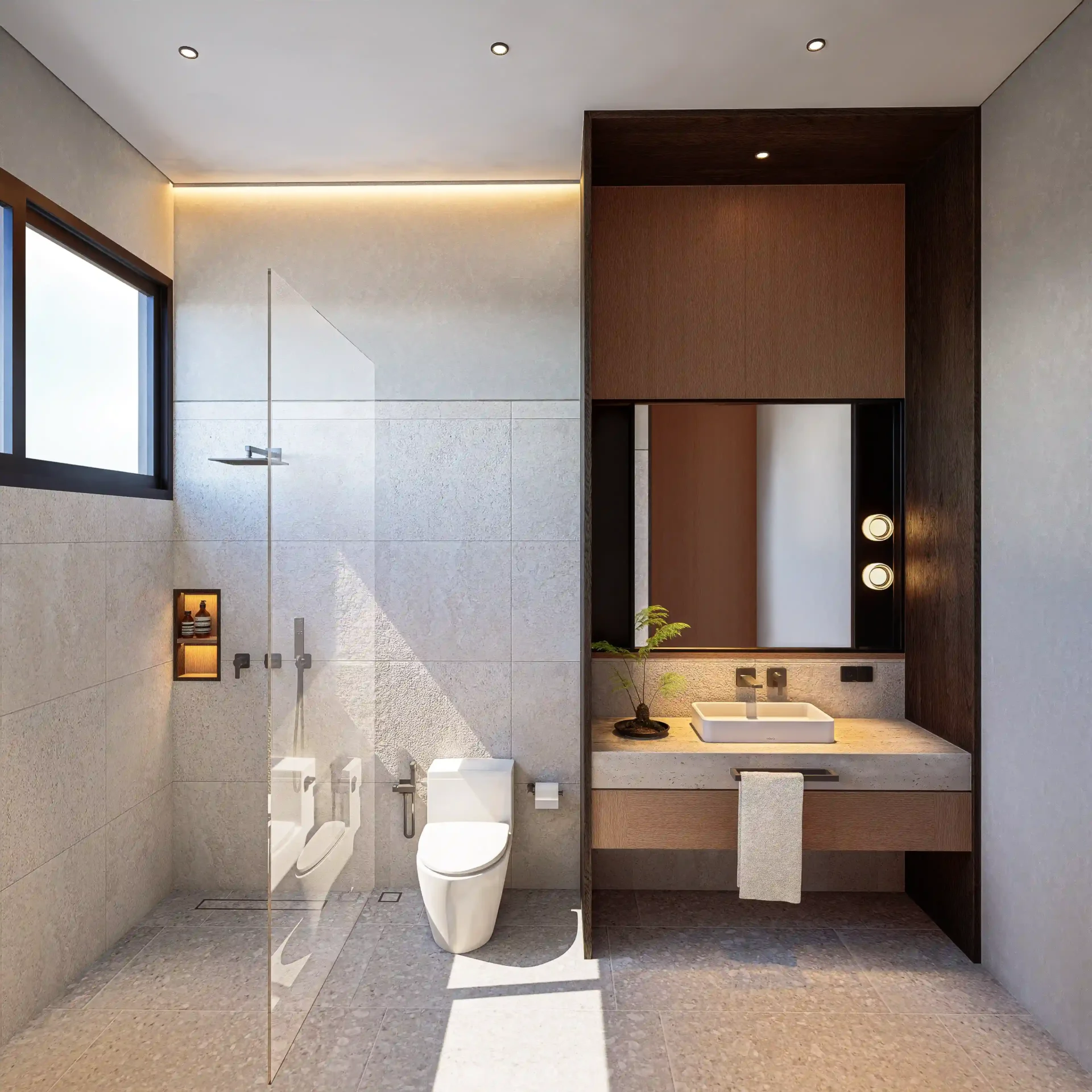
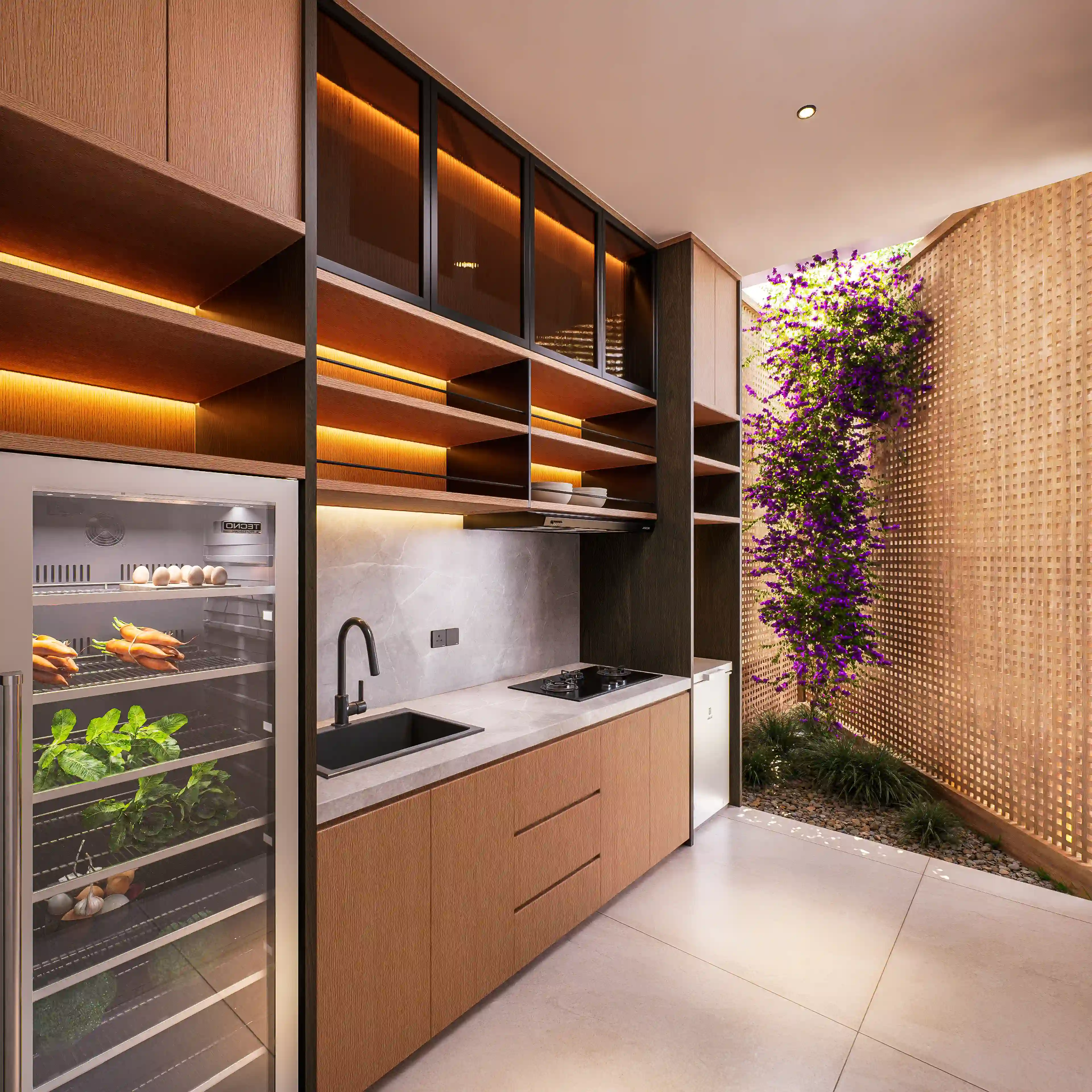
One of the most overlooked principles in how to create functional layouts is allowing natural elements to lead the design. Spaces used most often, such as living areas, kitchens, and workspaces, should be placed where they receive the best daylight and airflow.
Note: The images above are from Manon’s internal project, Mariposa House.
With this approach:
- Interiors feel more open and inviting
- Reliance on artificial lighting decreases
- Daily activities naturally align with daylight rhythms.
A functional layout does not resist its environment, but it responds to it.
5. Balance Openness With Privacy
Open layouts are appealing, but openness without intention quickly becomes uncomfortable. Functional layouts strike a balance that preserves visual connection without sacrificing your privacy or acoustic comfort.
Through thoughtful transitions, material shifts (case study: Mariposa House use Wood, Wooden Screens, Taupe/Beige Limewash Paint, Textured Paint, Natural Stone (Andesite)), and spatial layering, boundaries are defined gently rather than rigidly. The result is a sense of openness that still feels personal and grounded. Comfort, after all, is not about size, but it is about balance.
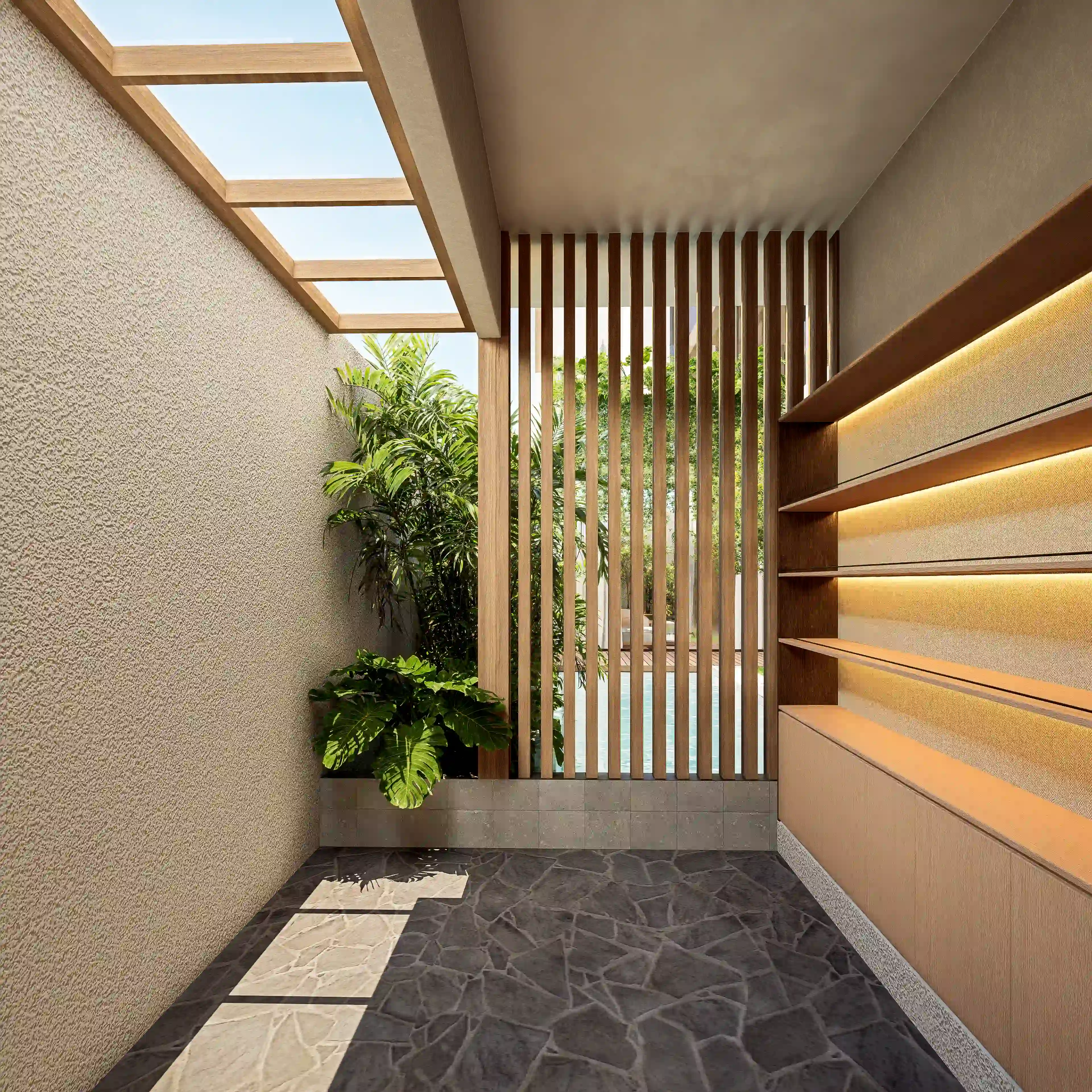
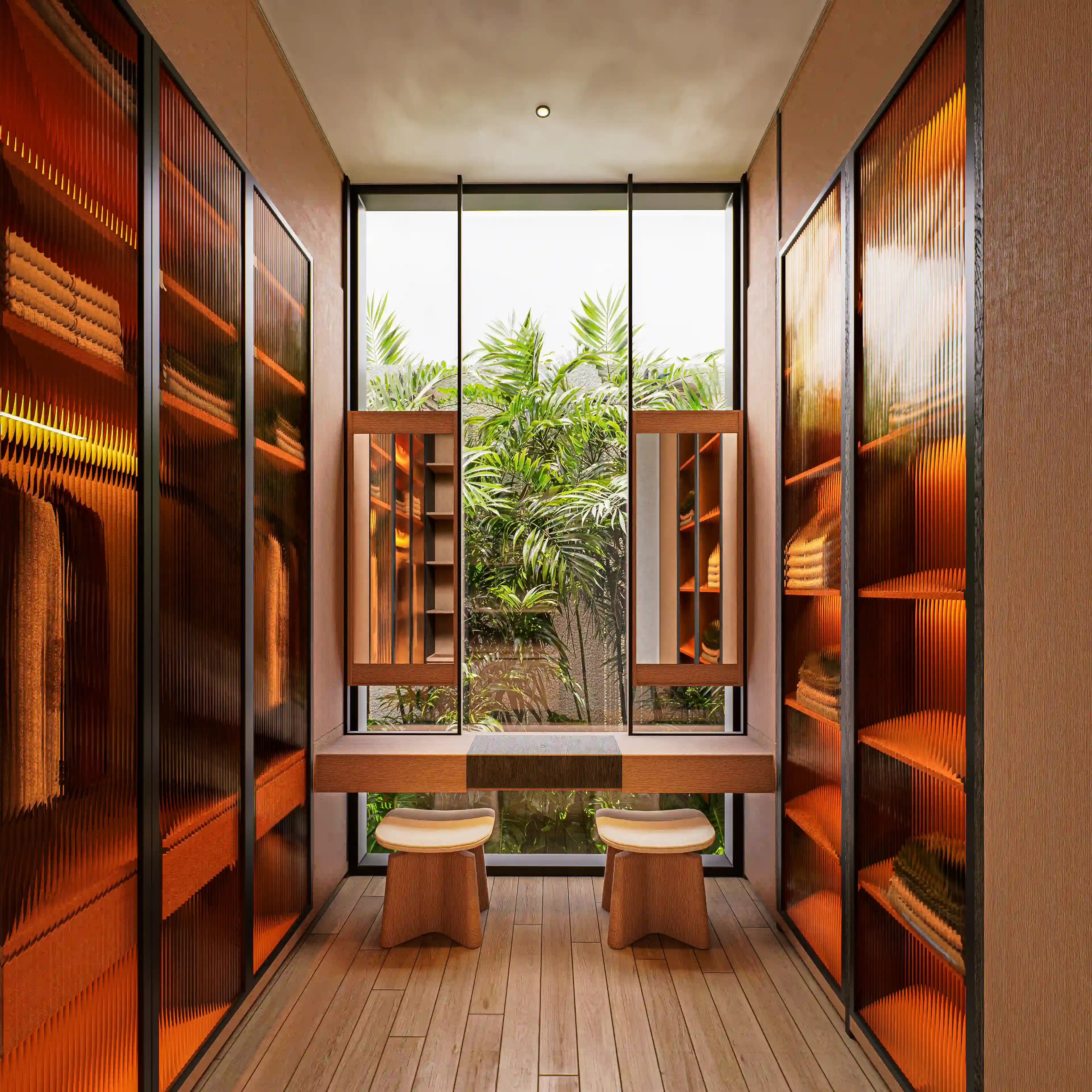
From another project, Mariposa House, you can learn how to create functional layouts. In this architecture, almost all rooms facing the pool use full-height sliding glass doors, creating a seamless connection between interior and nature.
To balance the openness without risking your privacy, here are several unique design points from Mariposa House.
a. Foyer Wall Water Feature
A water element on the foyer wall greets guests with a cool, calming presence. The gentle sound of water combined with soft lighting creates a sensory welcome ritual, emphasizing the living, natural, and serene character of the house.
b. Skylight Above the Stairs
The skylight above the stairs allows natural light to penetrate deep into the core of the building. During the day, sunlight shifts with time — giving rhythm and life to vertical circulation and enhancing the warm, open spatial experience.
c. Glass-Enclosed Master Bedroom With Semi-Outdoor Bathroom
The master bedroom features glass openings on three sides — two with sliding doors and the headboard side with a window panel — creating a space that merges with the garden and natural light.
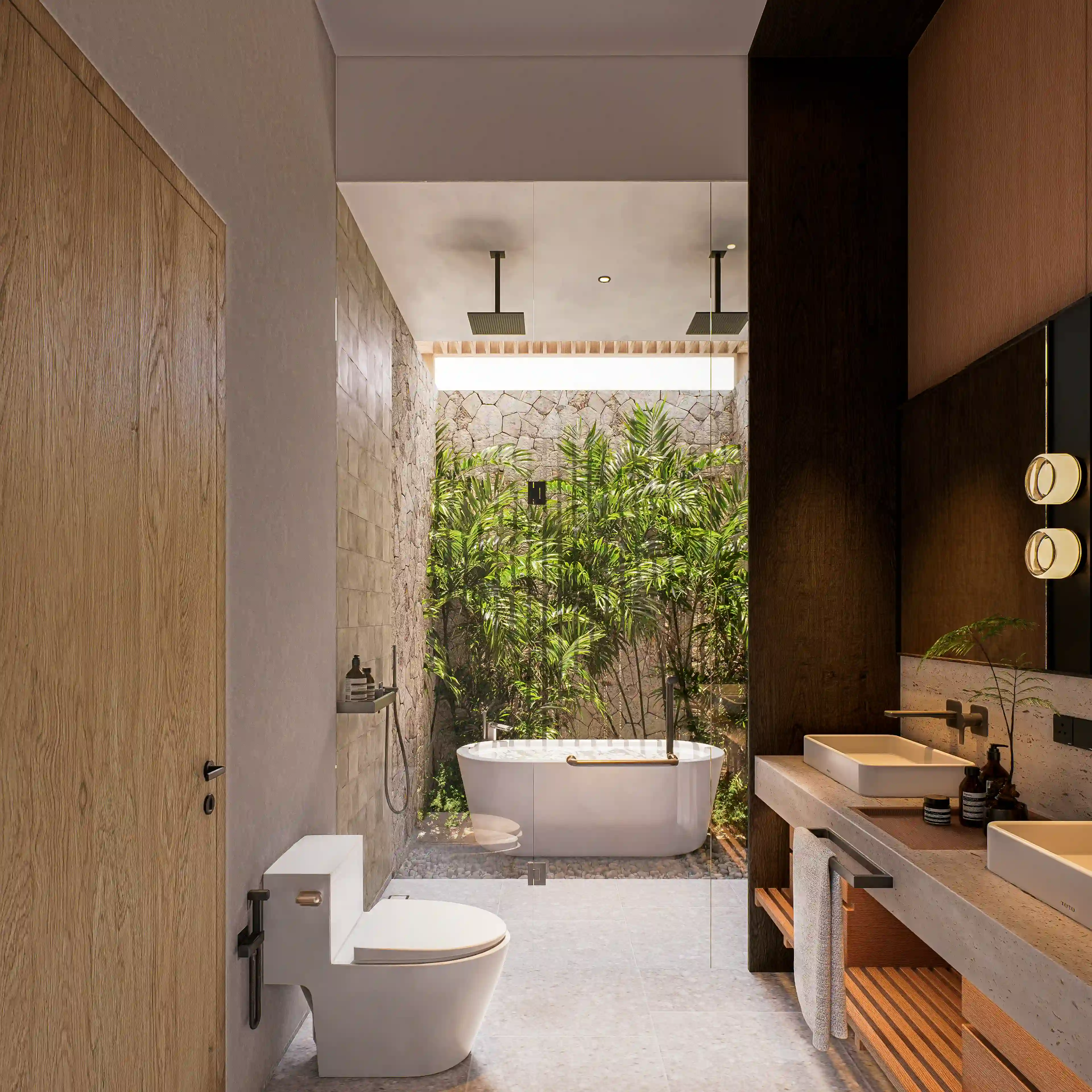
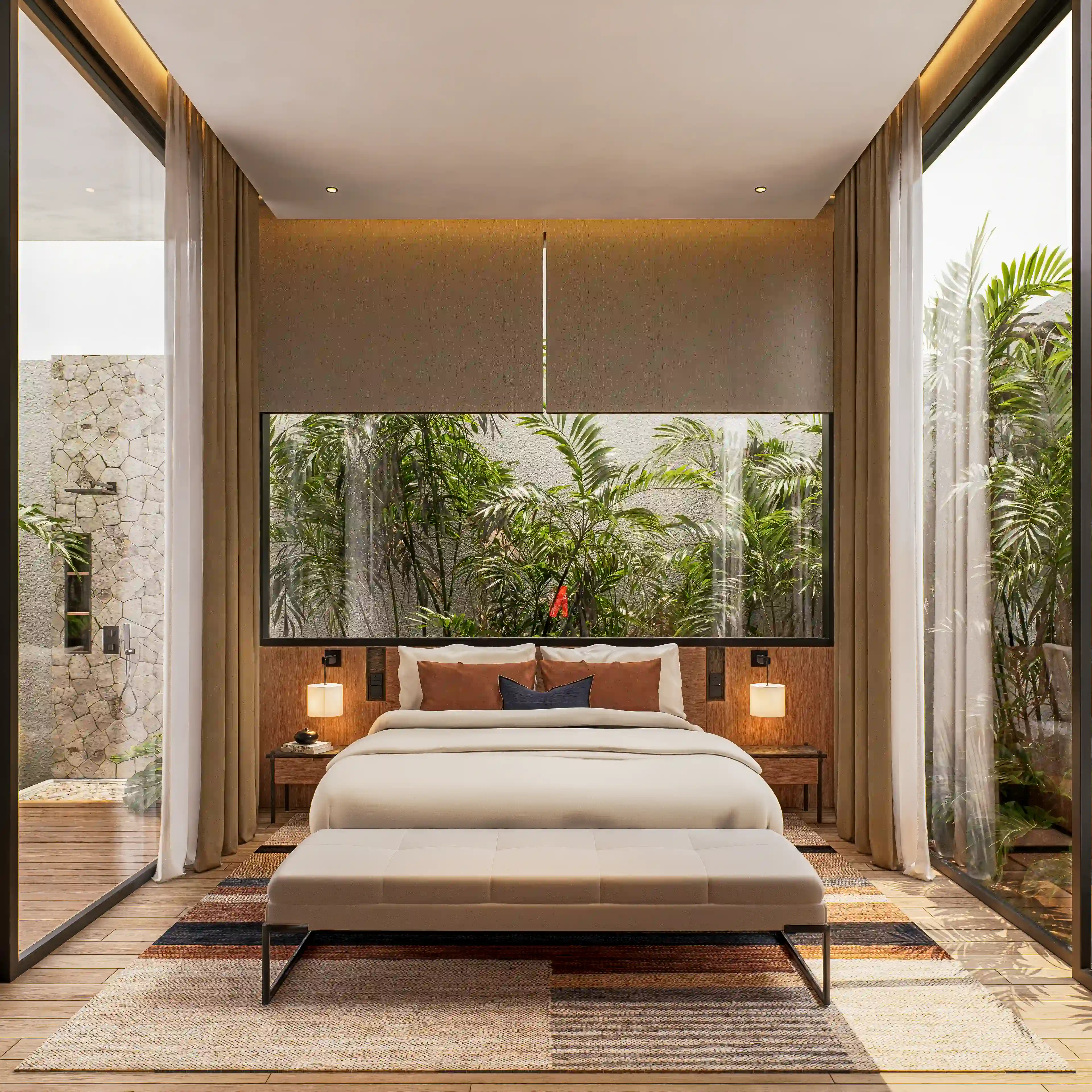
The semi-outdoor bathroom also adds an intimate tropical feel, balancing privacy with connection to nature, which is a reflection of a home that breathes freely.
6. Design for Timelessness, Not Just Today
When considering how to create functional layouts, it is important to look beyond immediate needs. Spaces that can adapt without major renovation remain relevant over time. Whether a guest room becomes a workspace or a living area as a family grows, flexibility adds long-term value.
Remember, a layout that grows with you is always a smarter investment.
7. Furniture Is Part of Architecture
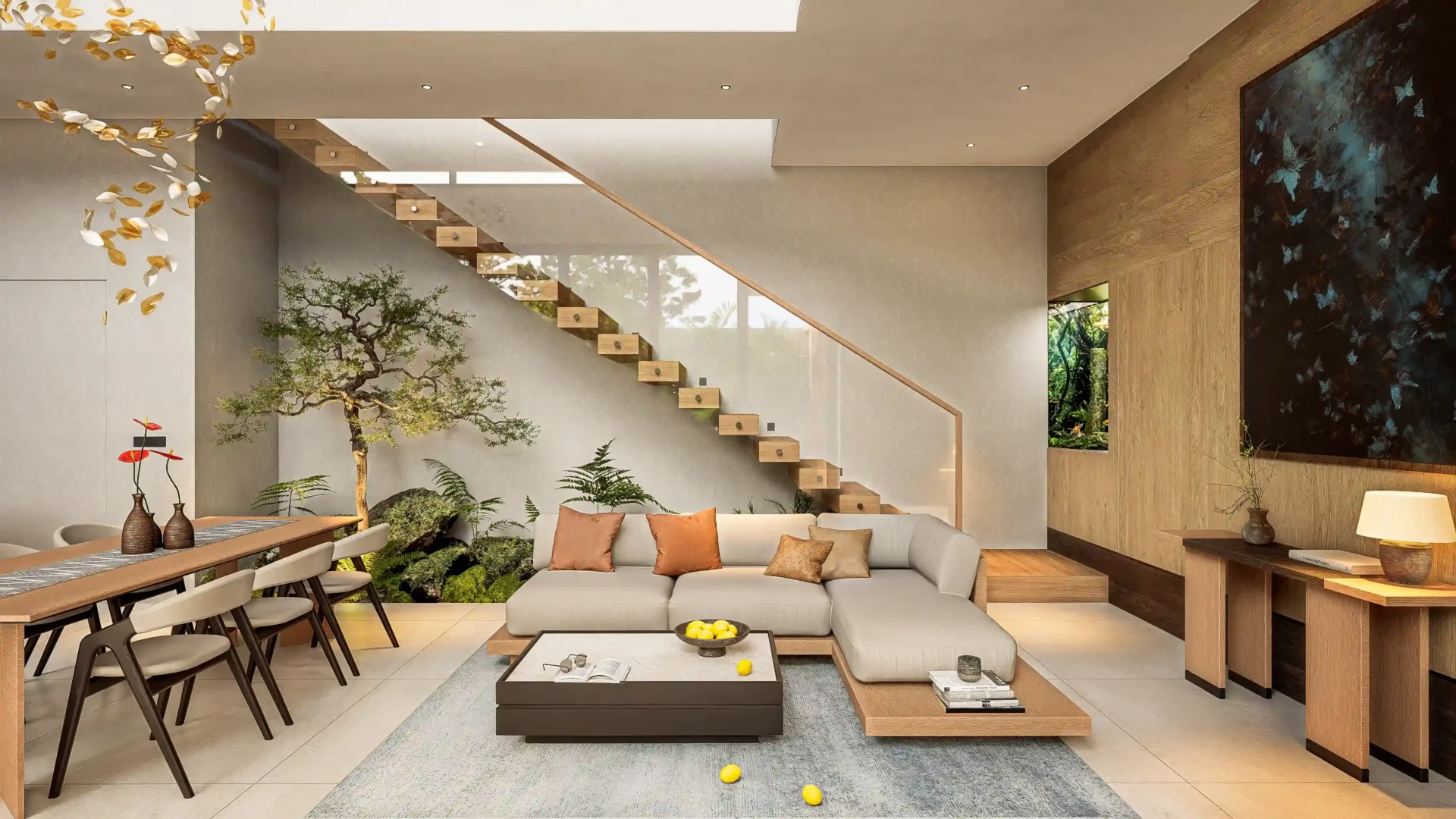
How to create functional layouts? Yes, you are right! Furniture placement influences movement, comfort, proportion, and even emotional clarity. That is why functional layouts consider furniture from the very beginning.
In tropical Indonesian architecture, furniture is more than decoration; it is an extension of the building itself. Proper furniture placement responds to climate, airflow, and cultural lifestyle, shaping how spaces are used and experienced.
In Bali, for instance, open-plan living and indoor–outdoor flow are central to comfort. Planning furniture early ensures seating, tables, and storage align with natural ventilation and sunlight patterns, preventing areas from becoming hot or humid while maintaining visual openness. Circulation paths will naturally follow breezes, sunlight, and garden views, reducing awkward corners and encouraging easy movement between indoor and outdoor spaces.
Furniture also reflects local cultural habits: low seating for family gatherings, daybeds for tropical lounging, or multi-functional pieces for hybrid living spaces where work-from-home and relaxation co-exist.
Moreover, materials like rattan, bamboo, and sustainably sourced wood not only suit the humid climate but also reinforce a connection to local craftsmanship and tropical aesthetics.
When furniture is treated as part of the architecture, layouts feel intuitive, comfortable, and culturally attuned.
Also Read: Master Plan Architecture for Future Urban Spaces
A beautiful space might catch the eye, but it is a functional layout that truly shapes how we live, like what we created at Villa Volcano Whisper and Mariposa House.
When every movement feels natural, every room supports your routine, and your space adapts effortlessly as life evolves, design becomes more than aesthetics; it becomes comfort, clarity, and ease. This is the true impact of knowing how to create functional layouts.
If you are planning a new project or rethinking an existing one, do not settle for spaces that only look good, but also choose layouts that truly work. Work with Manon Design Studio now, and let’s create spaces where form supports life, beautifully and intelligently!