Passive cooling refers to architectural strategies that reduce unwanted heat gain and enhance thermal comfort by utilizing natural processes—such as ventilation, shading, and solar control—rather than relying primarily on mechanical cooling systems such as air conditioning (Givoni, 1994; Whole Building Design Guide, 2023).
In tropical climates, high humidity and intense sunlight frequently lead to overheating and energy-intensive cooling solutions that compound long-term operational costs. Passive cooling addresses this through design — using airflow, shading, spatial configuration, and natural environmental forces to regulate temperature from the inside out.
The result is a home that stays comfortable, performs efficiently, and works with its climate rather than against it.
Why Passive Cooling Matters in Tropical Living
In tropical architecture, passive cooling is not a preference — it is a design necessity. Homes that rely entirely on mechanical cooling absorb the full burden of heat and humidity through their structure, then spend significant energy correcting the outcome. The dependence compounds over time: as cooling demand increases, so do energy costs and maintenance requirements.
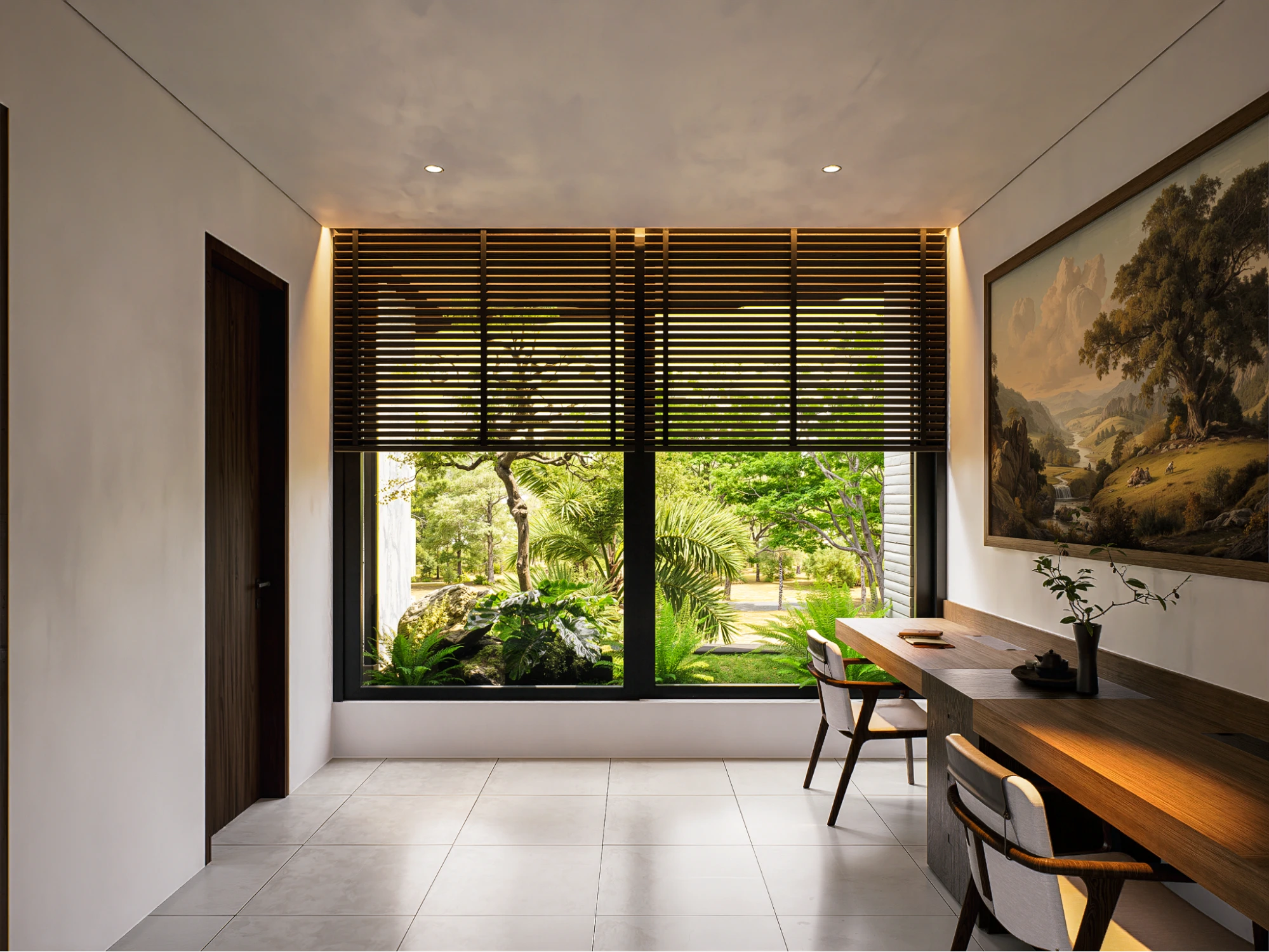
Passive cooling breaks this cycle. By embedding climate-responsive strategies into the architecture itself, homes achieve natural thermal comfort that reduces dependence on air conditioning, improves indoor air quality, and contributes to long-term energy efficiency.
For property investors and developers planning residential projects in tropical contexts, this translates directly into lower operating costs and stronger long-term asset value.
Idea 1 — Maximize Cross Ventilation
Cross ventilation is one of the fundamental strategies of passive cooling in tropical architecture, enabling continuous air exchange that helps remove accumulated heat and humidity from indoor spaces (Koenigsberger et al., 1974; Givoni, 1994.
The principle is straightforward: openings placed on opposing sides of a space create a pressure differential that draws fresh air through the interior and expels warm, humid air outward. Effective cross ventilation depends on deliberate placement — windows, louvres, and doors positioned to align with prevailing wind directions and to form unobstructed airflow paths across key living areas. When designed correctly, the movement of air through a space reduces perceived temperature significantly, even without any mechanical assistance.
Idea 2 — Use Deep Roof Overhangs and Shading
Shading is widely recognized as one of the most effective passive cooling strategies because it limits unwanted solar heat gain before it enters the building envelope (WBDG, 2023). Addressing it at the facade, before radiation reaches the interior, is considerably more efficient than managing it once it has entered the space.
Deep roof overhangs protect windows and walls from direct sunlight during the hottest periods of the day. Facade shading systems — brise-soleil, perforated screens, and strategic planting — extend this protection across broader surface areas. Together, they reduce the thermal load the interior must manage, which supports lower cooling demand and greater comfort throughout the day.
Idea 3 — Design High Ceilings
Higher ceilings enhance thermal stratification — the natural tendency of warm air to rise away from the occupied living zone. In a tropical home, this is a measurable comfort advantage.
When ceiling heights allow warm air to ascend, the lower portion of the space — where occupants live and move — remains cooler and more comfortable. Paired with appropriately placed high-level openings that allow accumulated heat to escape, high ceilings function as a passive thermal management system. The effect is a space that feels significantly more comfortable than its ambient temperature would suggest, without any active cooling input.
Idea 4 — Integrate Courtyards and Open Spaces
Courtyards function as microclimate regulators — improving both airflow distribution and natural daylighting across a residential layout. In tropical passive cooling design, they serve as central voids that draw air through surrounding interior spaces while reducing solar exposure to habitable zones.
A well-proportioned courtyard creates a natural convective loop: cooler air at ground level moves inward and upward, while warm air escapes through the open volume above. This continuous movement supports the broader ventilation strategy of the home, connecting indoor and outdoor environments in a way that enhances comfort throughout the day and into the evening.
Idea 5 — Evaporative Cooling with Water Elements
Water elements — reflective pools, shallow ponds, and water features positioned near key living areas — contribute a subtler but meaningful dimension to passive cooling. As water evaporates in response to heat and airflow, it absorbs thermal energy from the surrounding air, reducing ambient temperature in adjacent spaces.
In outdoor living areas and transitional zones between interior and exterior, this evaporative effect can lower perceived temperature noticeably, improving comfort during the hottest hours without any mechanical intervention. When integrated with the broader shading and ventilation strategy, water elements support the microclimate of the home in both functional and experiential terms.
How Passive Cooling Works as a System
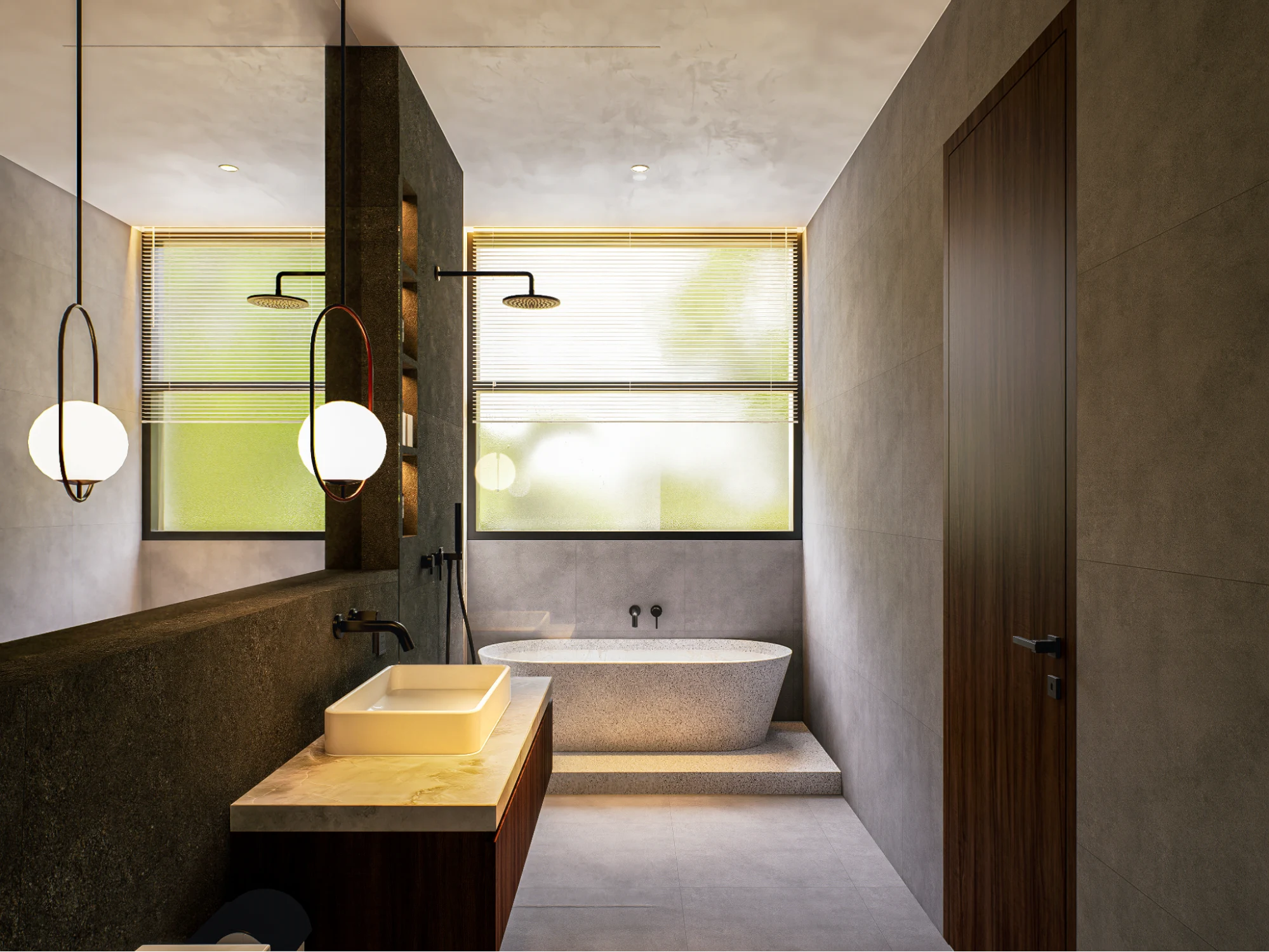
In practice, passive cooling performs best when its components are designed to operate together. Cross ventilation, shading, ceiling volume, courtyard airflow, and water elements each address a distinct aspect of thermal comfort — but their combined effect is greater than any single strategy in isolation.
In tropical residential projects, Manon Design Studio embeds these strategies from the earliest stage of architectural planning. Cross ventilation is shaped through spatial planning and opening placement.
Deep overhangs and facade shading reduce solar heat gain before it enters the interior. High ceilings support natural heat stratification. Courtyards serve as airflow and daylighting hubs. Water elements regulate the microclimate of outdoor living zones. Applied together, these interventions demonstrate how passive cooling can significantly improve thermal comfort while preserving architectural quality and long-term sustainability.
Conclusion
By combining cross ventilation, deep shading, high ceilings, courtyard integration, and evaporative cooling elements, a home can achieve a balanced, energy-efficient indoor climate suited to the demands of tropical living.
When designed with intention, these strategies are not secondary considerations — they are the architecture itself.
Manon Design Studio brings this climate-responsive approach to every tropical residential project. Contact us to explore how passive cooling can be integrated into your design from the ground up.