Luxury interior design is not defined solely by expensive furnishings or decorative abundance, but by the thoughtful composition of space, proportion, materials, lighting, and the overall experience they create for occupants (Ching, 2020; Pile, 2021)..
In many interiors, luxury is mistakenly interpreted as visual excess, resulting in environments that feel crowded rather than refined. True luxury interior design is rooted in restraint, proportion, and deliberate detail — creating spaces that feel timeless, intentional, and deeply comfortable.
Why Luxury Interior Design Is About Experience, Not Excess
The most significant shift in contemporary high-end design is the move away from decoration as a signal of wealth, toward space and experience as the defining qualities of refinement.
Luxury, in its most evolved expression, is spatial quality. A well-proportioned room with carefully selected materials and considered lighting communicates far more than a room filled with expensive objects. Emotional comfort — the calm that comes from a space designed with precision and restraint — is the true measure of a high-end interior. When every element is curated, and nothing is superfluous, simplicity itself becomes the luxury.
Tip 1 — Prioritize Space, Not Just Decoration
In luxury interior design, space is a design feature in its own right. Negative space — the deliberate absence of objects — communicates exclusivity as powerfully as any material or finish.
Overcrowded interiors, regardless of the quality of individual pieces, undermine the sense of refinement they aim to project. Open, considered layouts allow each element to be read clearly, proportions to be appreciated, and occupants to move through the space without friction. The discipline to edit — to remove what is not necessary — is one of the most important skills in high-end design, and one of the most frequently overlooked.
Tip 2 — Use Natural and Timeless Materials
Material selection is among the most consequential decisions in luxury interior design. Natural materials — stone, marble, solid timber, natural textiles — carry an inherent quality that synthetic alternatives cannot fully replicate. They respond to light, age with character, and communicate a level of craft and permanence that defines refined interiors.
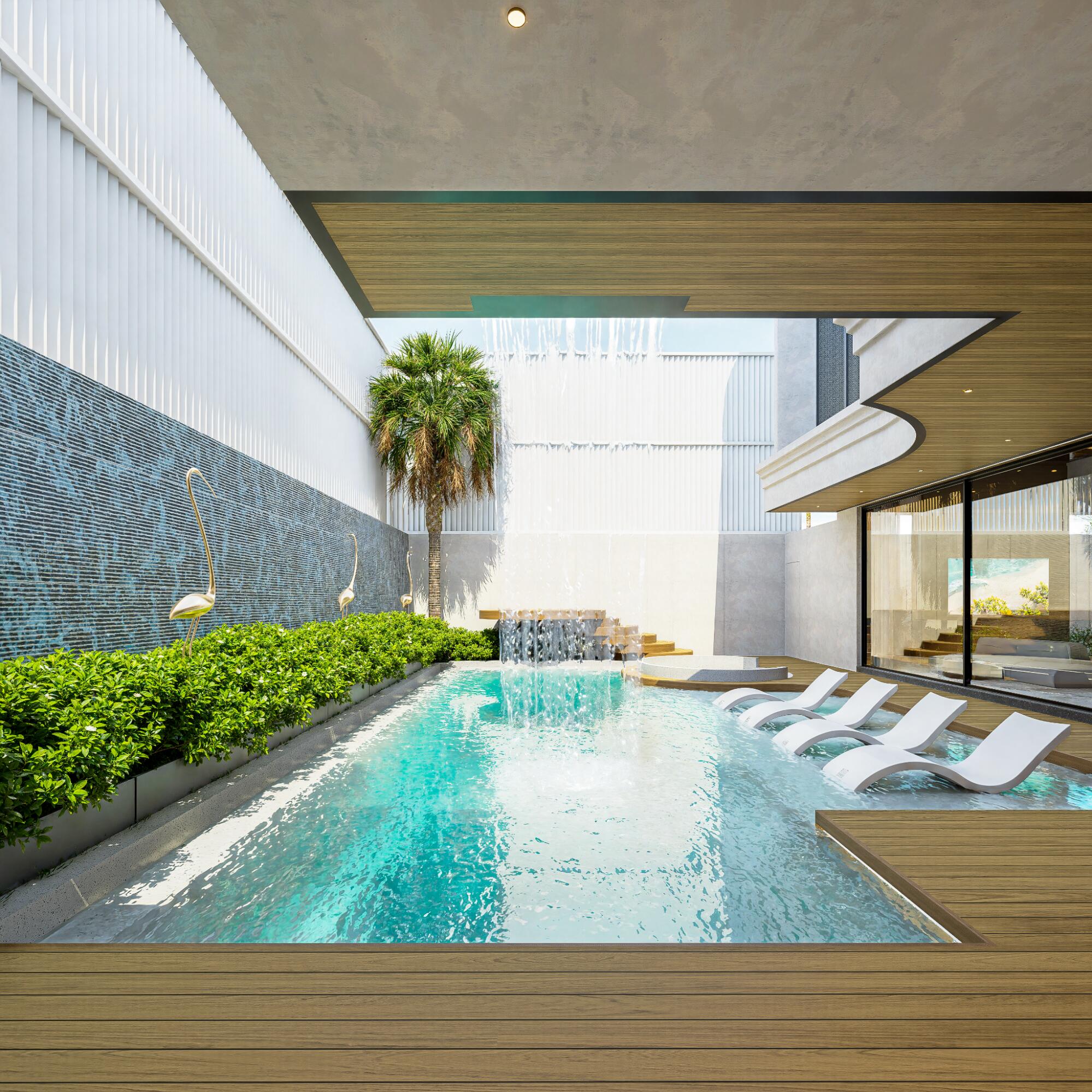
Trend-driven finishes, by contrast, date quickly and require replacement. Timeless materials maintain their elegance and their value over time — making them the more intelligent long-term investment for both residential and commercial projects. The choice of material is also a statement of intent: surfaces that age beautifully signal confidence in the design itself.
Tip 3 — Layer Lighting for Atmosphere
Lighting defines a space more than furniture does. It shapes how a room is perceived, how materials are read, and how an interior feels at different times of day and evening — which makes it one of the most powerful instruments in luxury interior design.
Effective lighting works in layers: ambient light establishes the overall tone, task lighting serves functional needs with precision, and accent lighting draws attention to architectural details, textures, and curated objects. The transitions between these layers — controlled through dimmers, placement, and fixture selection — determine whether a room feels flat or deeply atmospheric. In refined interiors, lighting is never an afterthought.
Tip 4 — Focus on Custom Details
Customization is central to exclusivity, and exclusivity is the defining standard of high-end interiors. Bespoke furniture, built-in joinery, and tailored proportions ensure that a space cannot be replicated — each element resolved specifically for its context, its occupant, and its purpose.
Custom details also reveal design intelligence. When joinery meets a ceiling at an exact height, when a threshold aligns precisely with a view, when hardware is chosen for weight as much as appearance — these are the decisions that distinguish a designed interior from a decorated one. The result is a space whose quality is felt before it is analyzed.
Tip 5 — Create a Strong Connection with Nature
Luxury spaces often feel more complete when they establish strong visual and physical connections with nature. Integrating natural elements, daylight, outdoor views, and seamless indoor–outdoor transitions enhances occupants' well-being, strengthens the sense of place, and enriches the overall spatial experience (Kellert et al., 2008; Browning et al., 2014)..
Indoor-outdoor integration — through framed views, considered thresholds, natural light, and living elements — grounds a space and gives it a quality that purely interior work cannot achieve alone.
Natural light is the most powerful of these connections. The way light moves through a space across a day, the way a view extends a room beyond its walls, the way natural ventilation makes an interior feel alive — these are the qualities that elevate a space from refined to genuinely exceptional.
How It All Works Together
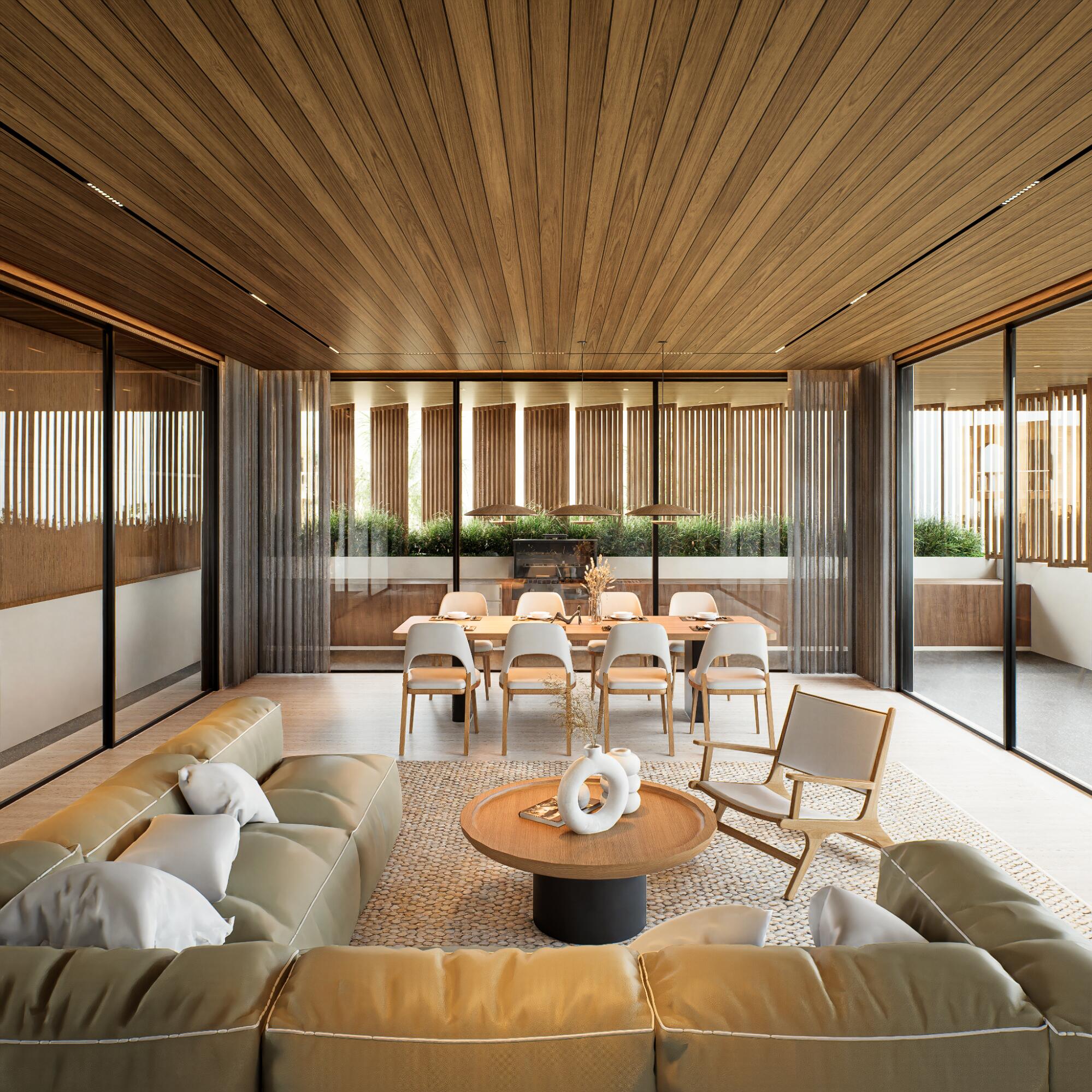
Space, material, light, custom detail, and nature do not operate independently — they form a system. Luxury interior design is the discipline of aligning these elements with precision so that the result feels seamless rather than assembled.
When each decision supports the others — when materials respond to light, when light enhances spatial volume, when spatial volume frames a natural view — the interior achieves a coherence that is immediately felt. Restraint and precision, applied consistently across every layer of a design, produce the quiet sophistication that defines genuinely elevated living.
Conclusion
Luxury interior design is ultimately about creating spaces that feel refined, intentional, and timeless — not visually excessive. By prioritizing space, selecting natural and enduring materials, layering lighting with purpose, investing in custom details, and connecting interiors meaningfully to nature, homes achieve a sense of quiet sophistication that endures well beyond any trend cycle.
These principles reflect a more considered understanding of luxury — one rooted in experience, not excess.
Manon Design Studio applies this philosophy to every residential and architectural project. Contact us to begin designing a space that reflects genuine refinement.