Picture this: you walk through your front door, and the room instantly feels breezy, softly lit, and full of living green. Instead of staring at a space that feels flat or sterile, your eyes catch warm textures, gentle color pops, and plants that make the whole place feel like it has fresh air built in.
That is the emotional promise of tropical interior design. It’s inspired by tropical regions, so it aims for a vacation-like calm while still feeling vibrant.
In reality, tropical design is broader and more intentional. It borrows the feel of tropical places and rebuilds that mood at home, using nature-inspired materials, greenery, an open and airy layout, and color that feels vivid but still calming.
Bring the outdoors in
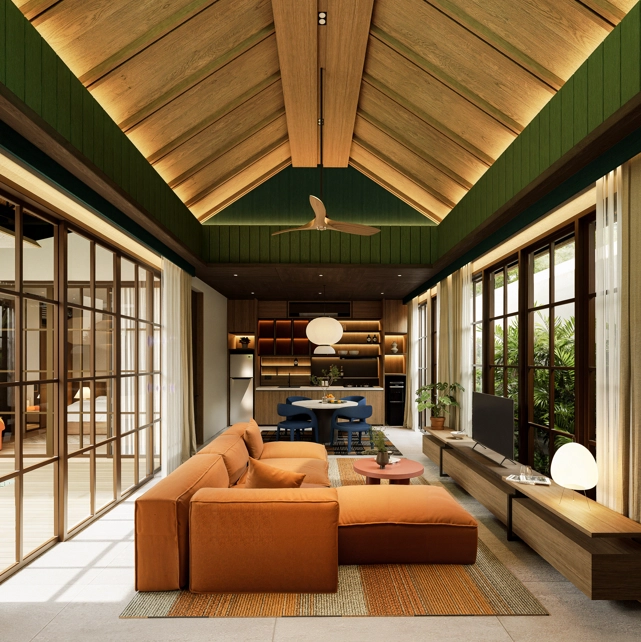
The core framework is simple: you bring outdoor cues into an interior space. That includes visual connection through lush greenery and botanical patterns, and material connection through natural elements like rattan, bamboo, wicker, and warm wood tones.
A similar approach can be seen in our Crescent Moon Villa, where greenery, natural materials, and the relationship between indoor and outdoor spaces help shape the overall tropical atmosphere
When these pieces work together, the room starts to feel alive. Plants add movement and freshness, while natural textures make the space feel warmer and more grounded. Even simple decorative choices, like botanical artwork, contribute to the same outdoors-in effect.
Interior Design Style Difference: Tropical vs Coastal vs Boho
These styles share some overlap because they allboth love natural materials and relaxed vibes. Still, they look different in the details. Coastal design often leans toward softer, beach-inspired tones and a lighter, more airy coastline feel. Boho is usually more eclectic and layered, with a wider mix of global textures and patterns that may not feel strictly tropical.
Tropical design generally places stronger emphasis on greenery, natural materials, and an indoor-outdoor character, while color can range from earthy neutrals to more expressive botanical tonesTropical design is the one that most strongly emphasizes dense greenery, bolder botanical character, and color references like ocean blues and coral warmth. If you want to recognize the difference, look for the “lush” quality first. Tropical spaces typically feel more plant-forward, while coastal may feel more light-and-wind focused, and boho may feel more free-form and mixed.
Why it matters: the benefits behind the look
Pros that make it worth it
The presence of indoor plants has been associated with positive physiological and cognitive responses, with research suggesting that indoor greenery can support a more relaxed experience in interior environments (Han & Ruan, 2022)Tropical interior design works because it changes how a space feels, not just how it looks. The result is a relaxing atmosphere where the colors and natural elements create a calmer mental rhythm. Greens, warm tones, and layered textures tend to feel soothing after a long day.
It also brings a reconnection to nature through a biophilic feel. Plants are the “heart” of the style, and natural materials help the room feel more alive than a purely decorative setup. On top of that, it is versatile enough for both apartments and larger homes, and it is often considered timeless because the outdoors-inspired mood does not go out of date easily.
The tradeoff you should plan for
The main downside is that the style asks for a little management. If you use live plants, you need to think about light and care, not just placement. Even without live plants, you still need the fundamentals right, because the airy tropical vibe depends heavily on beyond its visual role, natural light can also contribute to occupants’ experience of a home, with research showing that residential daylight conditions can influence perceived emotional well-being (Morales-Bravo & Navarrete-Hernandez, 2022) natural light and good airflow.
There is also a fine line between “tropical oasis” and “theme-park.” Overdoing patterns, piling up generic decor, or relying on artificial color alone can make the space feel cluttered instead of relaxing. The fix is balance and intention, so the look stays authentic while you enjoy it day to day.
Now that you know why this style works, the next step is understanding the mechanism itself, so you can build it in a real room rather than guessing.
What to watch out for in tropical styling
Tropical colors do not have to shout
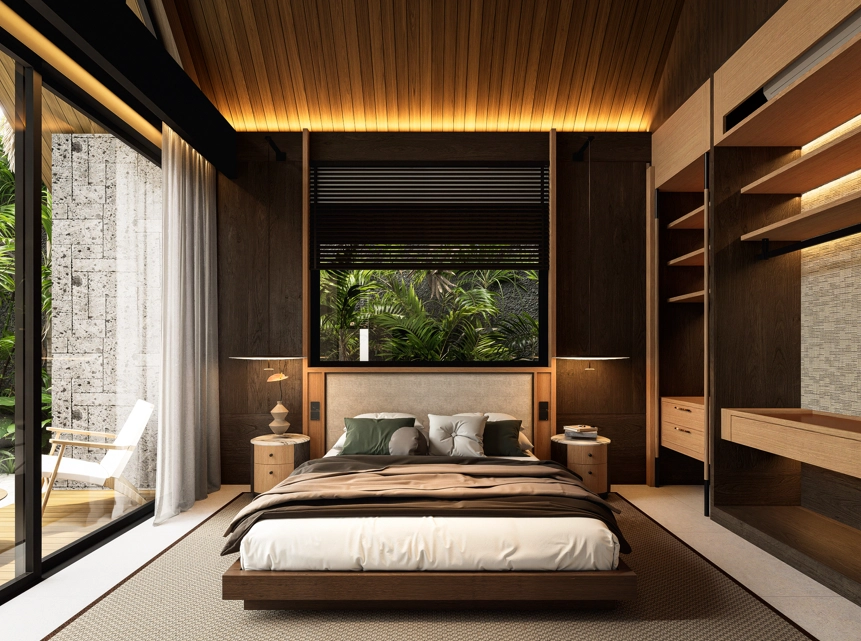
People often assume tropical design automatically means overwhelming bright colors everywhere. That belief comes from the obvious images we all remember: bold prints, sun-drenched palettes, and loud accents. The reality is that tropical interiors usually balance vibrant color with calm foundations.
If you paint everything the brightest shade and fill every surface with saturated hues, the room stops feeling relaxing. Instead of a resort-like calm, it can feel chaotic. So keep walls and big pieces light and serene, then place the brighter greens, blues, and corals where they matter.
Filling every corner makes it look themed
Over-accessorizing is another common trap. The instinct is to “complete the vibe” by adding more and more tropical items, especially small decor. But tropical design is about atmosphere, not a checklist of themed objects.
When every corner has a different pineapple, shell, or random tropical trinket, the space turns into clutter. It can feel less like an oasis and more like a themed display. Instead, choose a few high-impact pieces and leave some breathing room.
Artificial light cannot fully replace the sun
A common assumption is that artificial lighting can fully do the job if you choose the right bulbs. Artificial light helps, but tropical style depends on natural brightness and airflow to feel open and airy. That is where the “vacation” illusion starts.
When windows are blocked or you rely mainly on enclosed, heavy-feeling lighting, the room can feel closed in. The tropical vibe weakens even if the decor is correct. So protect the windows, use light treatments, and treat artificial light as support, not substitution.
With those pitfalls in mind, the reader now has the fundamentals, and the next step is seeing how the style becomes real through the design mechanism you control.
Study the rules that make it feel designer-level
Even a simple tropical room looks better when you understand the basics of interior design. Color theory helps you balance vibrant accents with calm foundations. Proportion and scale keep furniture and plants from making the room feel cramped or sparse.
Material properties matter too. When woven textures, wood tones, and fabric weights work together, the look stays coherent and relaxing instead of random.
- Use a calm base so accents can pop
- Respect scale for furniture and plant sizes
- Balance textures to avoid a flat look
- Keep patterns intentional and limited
Stay consistent with the framework, and your tropical home will gradually feel more natural, more calm, and more “yours” over time.
At Manon Design Studio, We will help you create your personal tropical interior design plan that stays calm, authentic, and easy to maintain for your space