The bathroom is usually the smallest room in a design brief, and the last one anyone wants to think hard about, right up until moisture, poor ventilation, or a badly placed vanity make it the most frustrating room in the house. Good bathroom interior design treats it with the same discipline as any other space: function first, atmosphere second.
It is also one of the few rooms where a design mistake shows up quickly and visibly; Poor ventilation allows moisture to remain in the bathroom, increasing the risk of condensation, mould growth, and premature deterioration of finishes over time (U.S. EPA)a poorly ventilated shower reveals itself in mould within weeks, not years, which is exactly why the unglamorous decisions here deserve as much attention as the finishes everyone actually notices.
The Bathroom Is Becoming a Wellness Space, Not Just a Wet Room
Bathroom design trends in 2026 continue to emphasize a more restorative, spa-like experience, reflected in warmer materials, softer lighting, and more considered storageIndustry coverage of 2026 bathroom trends consistently frames the room as a home spa rather than a purely functional space, evolving from strictly practical toward something closer to a haven for unwinding. That shift shows up in warmer materials, softer lighting, and more considered storage, but it does not remove the underlying engineering problem: a bathroom lives with constant moisture, and design choices either work with that reality or fight it.
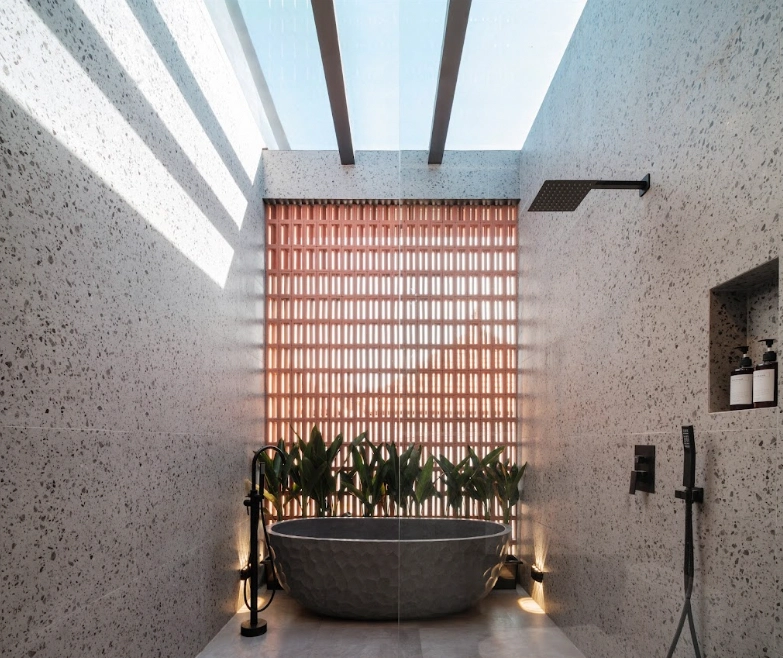
Core Principles of Bathroom Interior Design
- Solve ventilation and moisture first
Extraction, drainage, and material selection should be considered early, particularly in a warm, humid climate where moisture management is a recurring design concernExtraction, drainage falls, and material choice all need to handle sustained humidity before anything else gets decided. This matters more in a tropical climate than almost anywhere else.
- Zone wet and dry areas clearly
Separating the shower or bath from the vanity and storage keeps the dry zone actually dry, which extends the life of cabinetry and finishes considerably.
- Choose materials for durability, not just looks
Choose wet-area materials based on their resistance to moisture, staining, and repeated cleaning, while also considering the waterproofing system, installation details, and maintenance requirementsSealed natural stone, large-format tile with fewer grout joints, and treated timber all hold up better than trend-driven finishes that were never built for constant water exposure.
- Layer warm, functional lighting
Current guidance points toward lighting in the 2700K to 3000K range for a warm, relaxing tone, paired with brighter task lighting at the mirror for grooming.
- Keep storage built-in
A bathroom that relies on added-on baskets and shelves rarely stays calm for long. Storage planned into the vanity or a recessed niche keeps the room feeling composed.
Designing Bathrooms for a Tropical Bali Climate
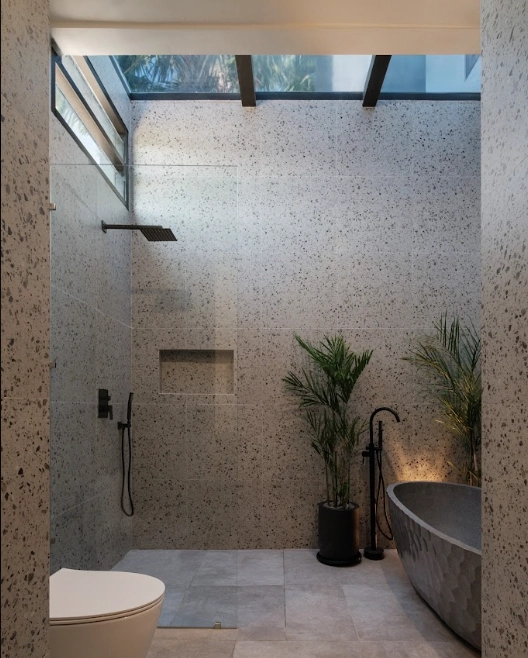
In a Bali bathroom, operable openings can support air movement when outdoor conditions allow, while appropriately designed mechanical extraction provides a more reliable way to remove moisture generated by showers and bathing (U.S. EPA) Cross-ventilation, a well-placed skylight, or an openable high window does more for a Bali bathroom than almost any finish choice, since trapped humidity is the single fastest way to shorten the life of a beautiful design.
Stone and tile can work well in tropical bathrooms when the specific material, finish, waterproofing, installation, and maintenance strategy are appropriate for repeated moisture exposure Natural stone and tile remain the most reliable surfaces here, largely for the same reasons they show up throughout our natural materials work: they are built to age with moisture rather than fail because of it.
Many of our villa projects also lean into a half-outdoor bathing area, a private courtyard shower or an open-air bathtub, which is very much in keeping with Bali's indoor-outdoor design language and solves ventilation almost by default. Lighting decisions here follow the same layered approach we cover in interior lighting ideas, just adapted for a wet room.
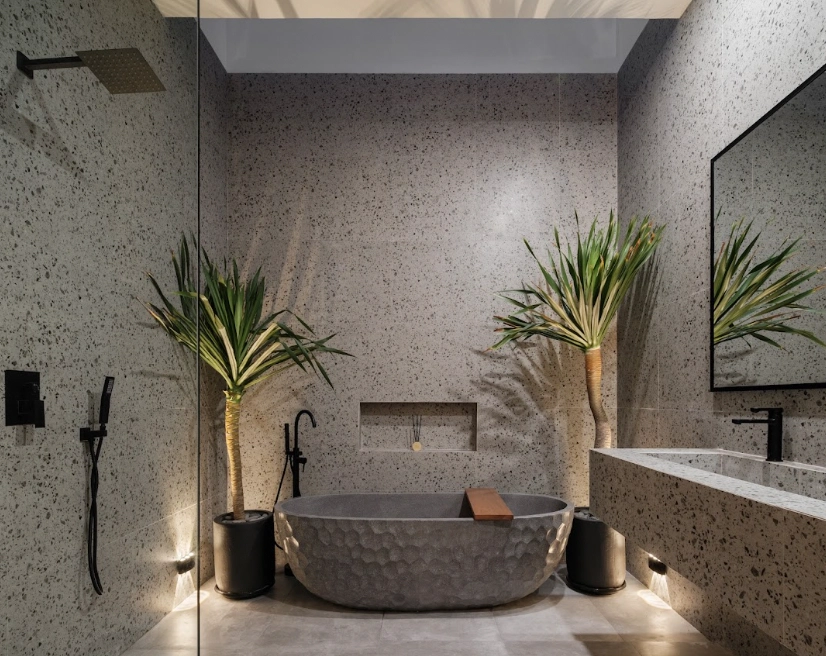
Bathroom Interior Design in Practice: Putri Tirta Villa
At Putri Tirta Villa, bathroom interior design balances the practical requirements of a wet room with a more open, restorative atmosphere.
The shower and freestanding bathtub are organized within a clearly defined bathing zone, while glass separation helps contain water without visually closing off the space. Recessed wall niches provide integrated storage for everyday essentials, keeping additional shelving to a minimum.
Above, a glazed roof brings natural light deep into the bathroom, while greenery and a screened opening strengthen its connection to the outdoors. Together, these elements create a bathroom that feels calm and open while keeping wet-area functions clearly organized.
What Often Gets Overlooked
Ventilation is the single most underestimated line item in a bathroom brief. It is invisible in a render and easy to cut from a budget, yet it is the one decision that determines whether the rest of the design, however beautiful, actually survives contact with daily use in a humid climate.
Storage is the second most common oversight. A bathroom designed purely around the shower and vanity often ends up with toiletries, towels, and cleaning supplies stacked on every available surface within a few months, which undoes the calm the design was meant to achieve. Planning a recessed niche or a closed cabinet into the layout from the start avoids this almost entirely.
Finally, many bathroom briefs treat lighting as decoration rather than function, choosing a single statement fixture and calling it done.
A bathroom genuinely needs at least two lighting layers: task lighting bright and even enough for grooming, and ambient lighting warm enough to feel like a retreat rather than a clinic, and conflating the two usually leaves one of those needs unmet.
A slower, but equally common issue, is choosing grout and sealant without a maintenance plan. Even the best-specified bathroom needs resealing over time in a humid climate, and budgeting for that upkeep from the start avoids the slow decline that makes a bathroom feel tired years before the fixtures themselves are actually worn out.
A bathroom that looks good in a photo but cannot manage moisture effectively is not performing as well as it shouldA bathroom that looks good in a photo but stays damp and mouldy within a year was never actually well designed. If you want a bathroom that holds up to Bali's climate as well as it photographs, our interior design services team in Bali can help you get the balance right.
Ready to plan a bathroom that actually performs? Reach out to Manon Design Studio to get started.