
Mid-year reviews are often treated as scorecards. Completed projects, financial performance, and targets are measured to determine whether an organisation is moving in the right direction.
These indicators matter, but they describe outcomes rather than the systems behind them. They do not always reveal whether a team is learning, identifying risks early, or making clearer decisions together.
For an architecture studio, those questions are closely connected to design quality. A strong architecture design process depends on how people examine ideas, resolve uncertainty, and carry a shared direction into practice.
Held as a full day event on 31 July 2026, Manon Design Studio’s Mid-Year Meeting reflected this broader view of performance. The session created space for reflection, recalibration, discussion, and input from across the organisation. Its purpose was not only to review completed work, but to consider how the studio should think, work, and create value in its next phase.
Why Reflection Matters in Design Practice
Architecture develops through a sequence of decisions. A project must respond to the client’s aspirations, site, climate, budget, technical constraints, and intended experience.
When internal processes are unclear, a strong concept can lose consistency during development and execution. Reflection helps identify communication gaps and address risks before they affect a project.
During the meeting, I highlighted four priorities: reflection and recalibration, early risk detection, realigning strategic priorities, and constructive dialogue. These priorities support clearer recommendations and a more reliable architectural workflow.
This emphasis on understanding before action echoes the Design Council’s Double Diamond framework, which begins by defining a challenge before developing a response. Both recognise that clearer outcomes depend on examining the problem before committing to a solution.
Understanding Before Designing
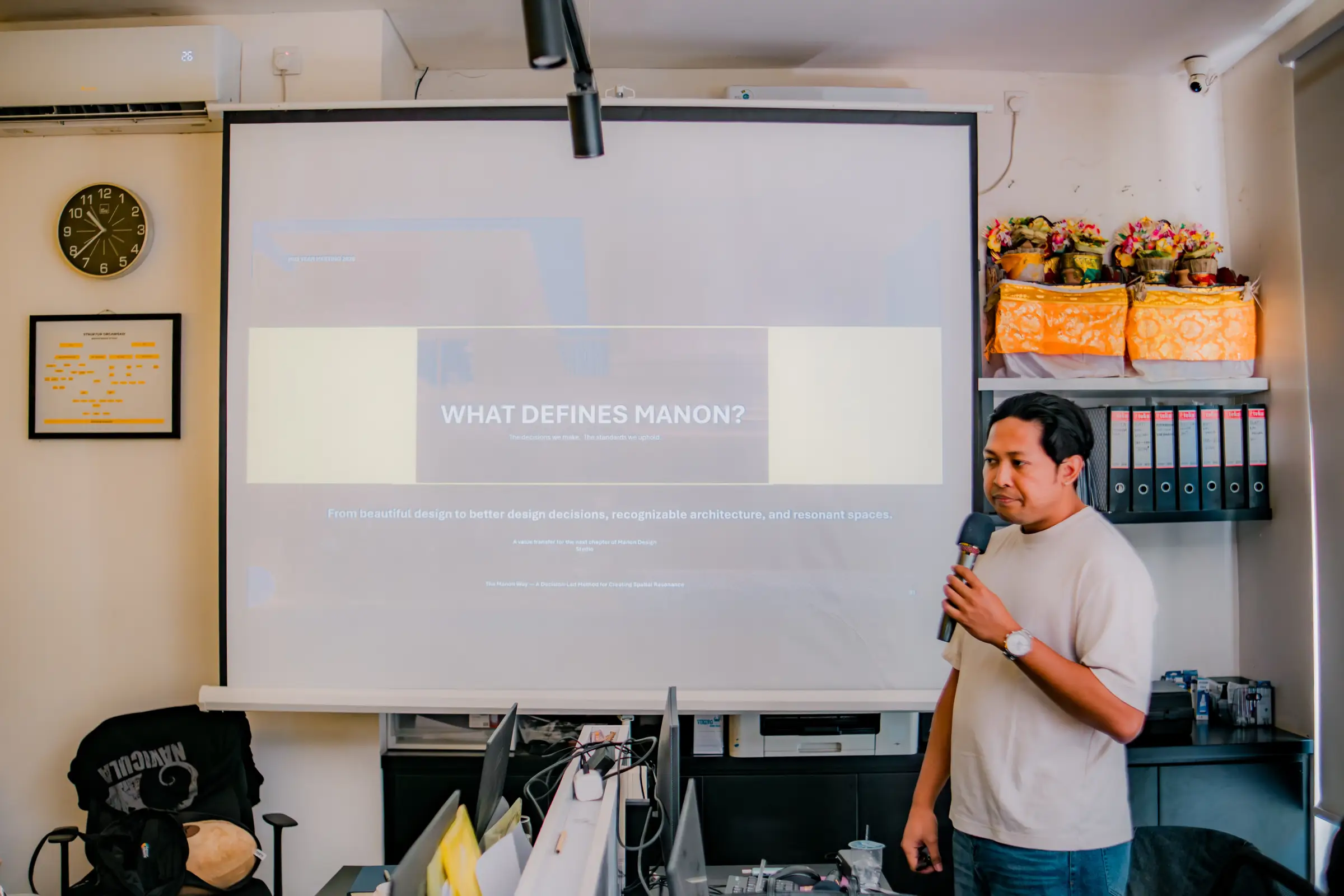
Brahasata Indra, CEO of Manon Design Studio, introduced three connected pillars: Understand, Align, and Implement.
Understand begins with clarifying what the studio is trying to achieve and why. Manon is moving beyond an approach centred mainly on visual aesthetics. Design should also be evaluated through decision quality, strategic impact, spatial resonance, and meaningful user experience.
This principle also informs Manon’s architecture services and interior design services, where the first responsibility is to understand the client, site, and intended experience before establishing a direction.
Alignment Creates Better Architecture
Align focuses on shared understanding of Manon’s goals, philosophy, core systems, and principles of spatial resonance. In a multidisciplinary studio, ideas pass through several roles. Without alignment, each transition creates room for different interpretations.
Alignment gives individual judgement a common foundation. It makes discussions more precise, responsibilities clearer, and collaboration less dependent on assumption.
This shared design language also matters to clients. A long-term design partner should explain why decisions are made and how the original vision is maintained throughout the architecture design process. Readers can also explore Manon’s article on Modern Architecture.
Implementing Ideas into Practice
Implement addresses the distance between intention and execution. A framework has little value if it remains part of a presentation. It must be translated into workflows, operational processes, and clear responsibilities.
Implementation turns design methodology into repeatable practice, giving ideas a clear path from discussion to action.
How This Thinking Shapes The Manon Method
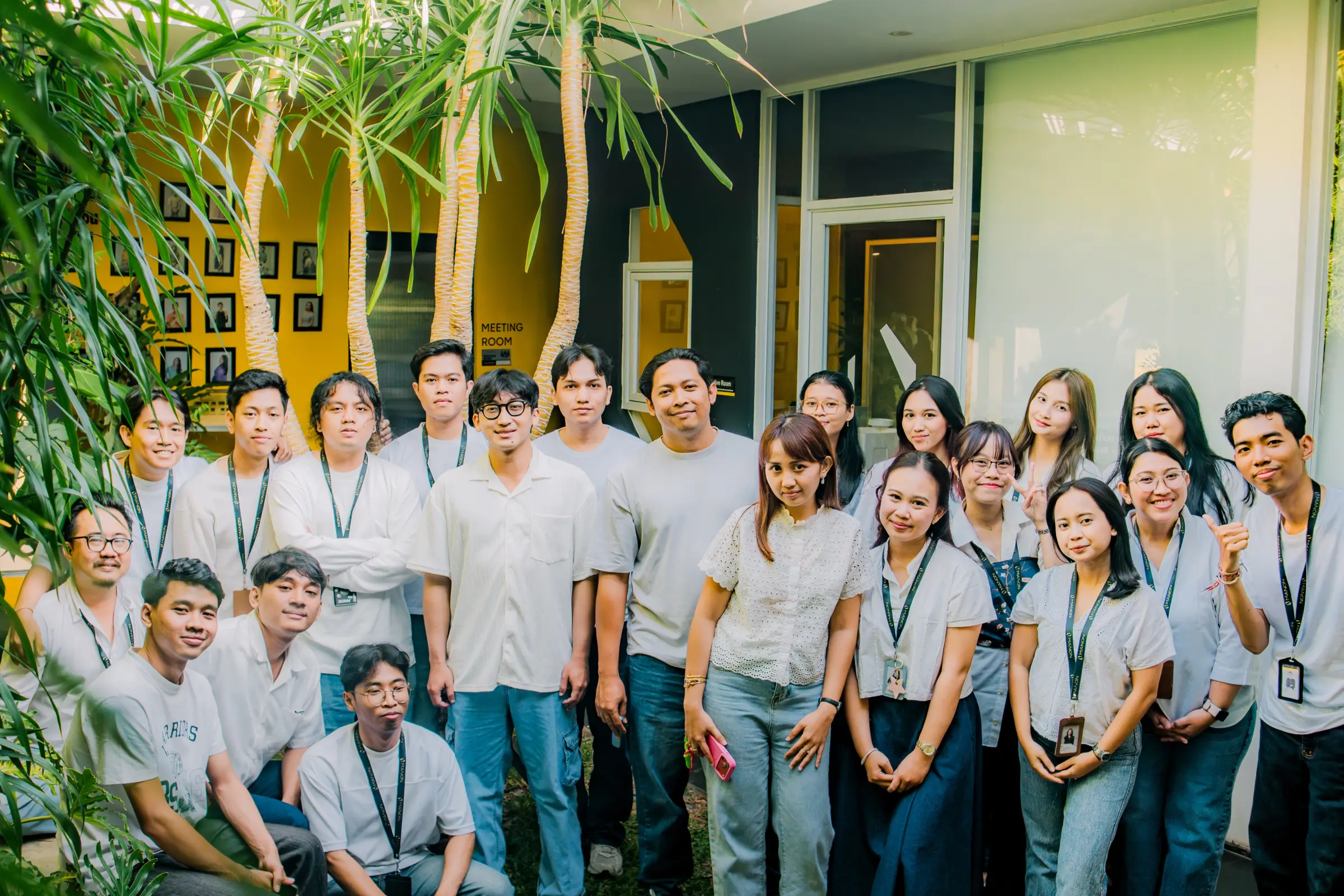
Sustainable growth is not defined only by more projects or broader market reach. It also depends on whether an organisation can maintain decision quality as its responsibilities increase.
Understand establishes purpose. Align creates shared direction. Implement brings that direction into daily practice.
Manon’s philosophy, Nature Inspired, Brand Defined, begins with context and develops architecture around a clear purpose. A strong architecture design process begins in the same way—through clear thinking, careful listening, and purposeful conversation.
Together, these principles strengthen The Manon Method: understanding the people behind a project, studying its context, clarifying the design direction, and carrying that understanding through the architectural workflow. This approach is also explored in The Manon Method video.
See how this approach informs The Manon Method and the work presented in our company profile. If you are considering a residential, hospitality, or commercial project, start a conversation with our team and explore how this thinking may apply to your vision.