Imagine walking through your future home before a single wall is built — feeling the soft coastal light, sensing how spaces flow, and knowing whether the atmosphere delivers the calm you envisioned. That is precisely what virtual reality now makes possible for a coastal design house, and it fundamentally changes how clients and designers make decisions together.
Coastal design is built on atmosphere. The calm it delivers comes from light, materials, and spatial rhythm — not from nautical accessories or obvious beach references. Getting those elements right in a coastal design house requires more than a mood board. Virtual reality bridges that gap, allowing you to experience the design before committing to it.
What a coastal design house really means
According to contemporary interior design principles, a coastal home is defined by a refined sensibility rather than a literal beach theme. Experts highlight that this aesthetic captures the essence of the coast by prioritizing natural light, a muted palette, and natural textures, while fostering a seamless indoor-outdoor connection to create a space that feels bright, airy, and sophisticated..
The distinction matters. A beachy look can feel casual and literal. A coastal design house stays more sophisticated: clean lines, muted tones, and a palette that feels natural rather than costumed. A living room with a warm white sofa, a seafoam accent pillow, and a woven jute rug reads coastal through softness and texture — not through anchors on a shelf.
A coastal design house also extends well beyond décor. It lives in how the home is shaped, organized, and connected to its surroundings. Indoor-outdoor flow, wide openings, and seamless transitions are as consequential as finish selections. A dining area that opens directly onto a covered patio — with consistent flooring and a wide door framing the garden — delivers the coastal effect because the outdoors becomes part of daily life.
Beyond aesthetics, these design decisions enhance the daily living experience. Larger openings maximize natural light and ventilation, while seamless indoor-outdoor connections make spaces feel brighter, larger, and more comfortable throughout the day.
How virtual reality transforms the coastal design process
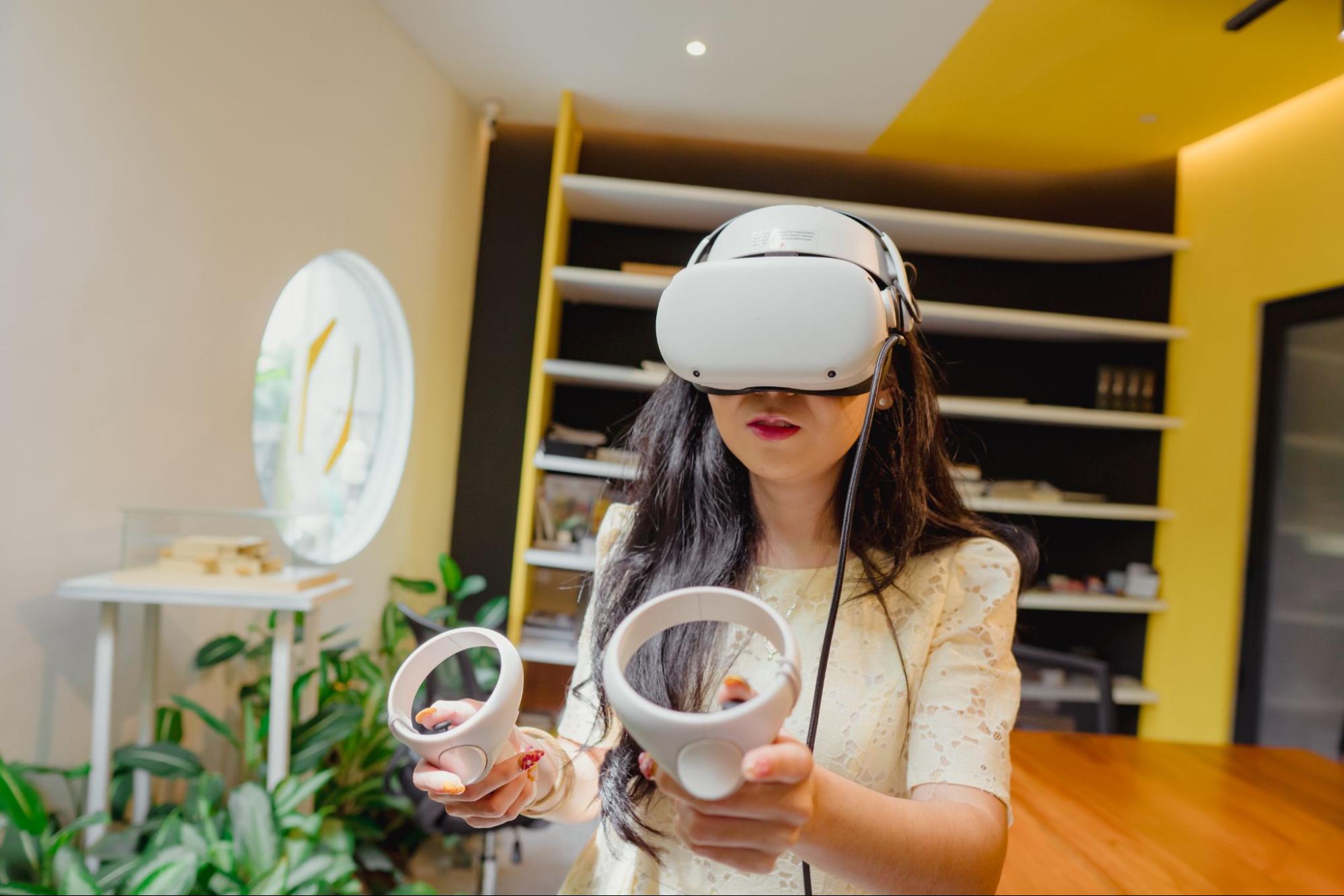
This is where VR becomes genuinely valuable. A coastal design house relies on subtle, interconnected decisions — palette, texture, light, and spatial flow — that are difficult to evaluate on a flat screen or a physical sample board.
With VR, clients walk through a fully rendered version of their space before construction begins. You can assess whether light feels soft or harsh at different times of day, whether indoor-outdoor transitions feel seamless, and whether the overall atmosphere delivers the calm you are looking for. Adjustments that would cost significant time and money after construction can be resolved in the virtual environment first.
For luxury coastal projects specifically, this matters because the margin for error is narrow. The difference between a coastal design house that feels effortlessly refined and one that feels overly themed often comes down to decisions that are difficult to evaluate in two dimensions — the depth of a texture, the weight of a color on a large wall, the proportion of a room relative to its openings.
Palette and materials in a virtual environment
One of the clearest benefits of VR in coastal design is palette validation. Most clients instinctively reach for bright blue and crisp white, then discover the combination feels harsh or cold once applied at scale. VR surfaces that problem before any material is ordered.
A coastal design house works with washed, muted tones — a dominant base, a secondary support, and a restrained accent. Layered over that are natural textures: linen, jute, rattan, sisal, and weathered wood. In a virtual walkthrough, you can observe how those materials interact with the light and whether the palette stays calm or tips into sharp contrast.
The same applies to indoor-outdoor transitions. Seeing consistent flooring carry from an interior living area onto an exterior terrace in a VR environment makes it immediately clear whether the connection feels intentional or incidental.
What VR helps you catch before it becomes costly
Several recurring errors in a coastal design house are easier to identify — and correct — in a virtual environment before construction locks them in.
Going too literal with nautical references tips a space from refined to themed. VR makes this obvious because you experience the room spatially rather than evaluating it item by item. Ignoring texture depth is another frequent misstep — without layered materials, a coastal interior reads as sterile, and a VR walkthrough reveals this immediately. Overlooking spatial flow is perhaps the most consequential error: a room can have the right colors and materials and still miss the coastal effect entirely if movement feels blocked or spaces feel disconnected.
These principles were also explored during the design process of our Havenara project, allowing the spatial atmosphere, material palette, and indoor-outdoor experience to be evaluated through virtual visualization before construction began
Designing toward calm, not chasing it
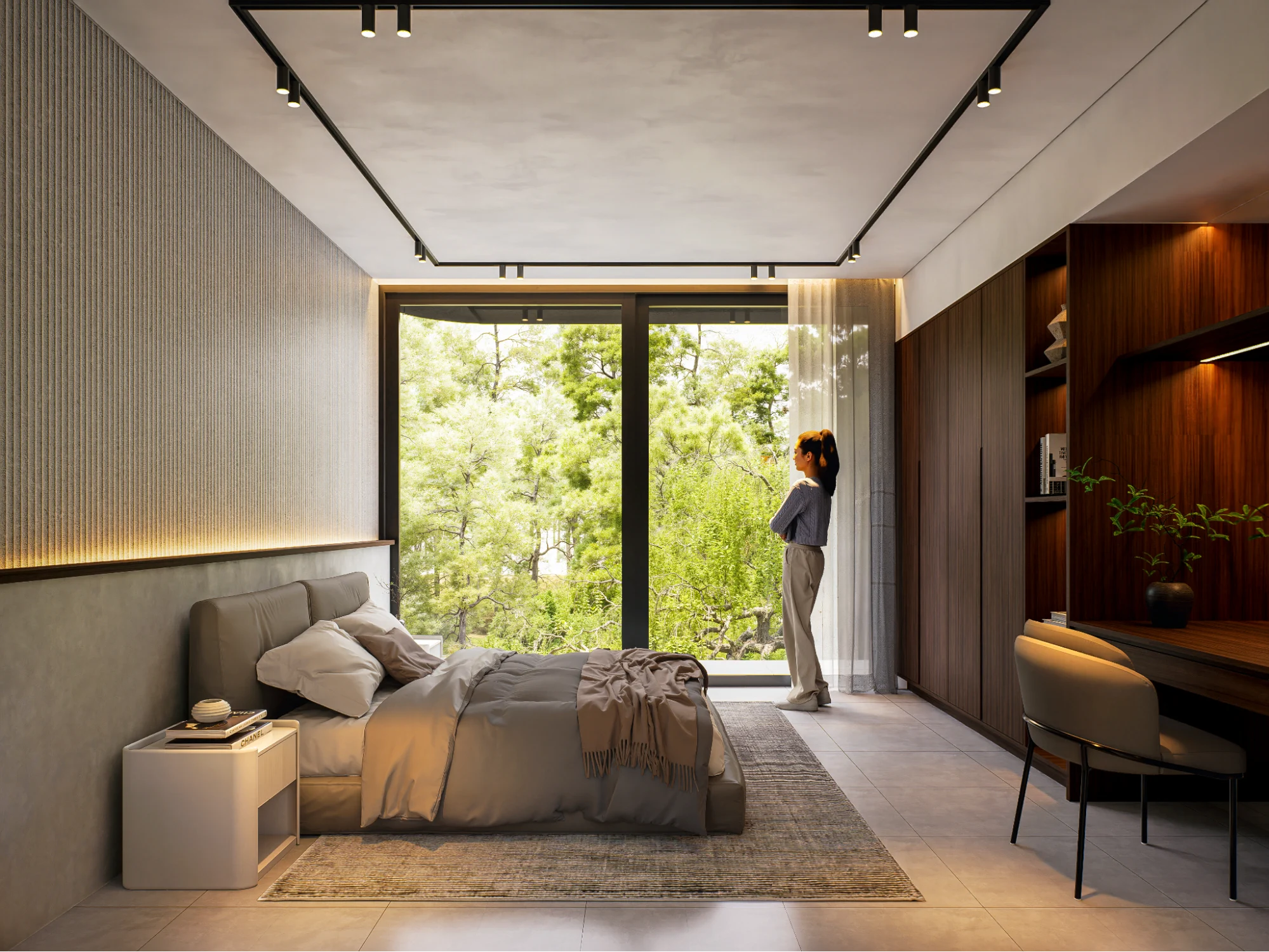
A coastal design house works because it is systematic — palette, materials, light, and flow aligned toward a single atmospheric goal. Virtual reality makes that system visible and testable before any physical commitment is made.
For property investors, developers planning residential complexes, or clients seeking architecture and interior design services, VR-assisted design represents a meaningful shift in how luxury projects are evaluated and refined. Decisions become more confident, revisions happen earlier, and the result is a coastal design house that performs as intended from the first day you walk in.
Manon Design Studio brings this approach to every coastal project — ensuring the calm, refined atmosphere you envision is validated and refined before construction begins. Contact us to arrange a consultation.