Picture a room where nothing shouts for attention: a low wooden bench, one ceramic bowl resting alone on an open shelf, and warm afternoon light spilling across a linen curtain. Nothing is bare for the sake of being bare, yet every corner feels considered. That quiet, grounded feeling is the pull of japandi interior design, and it is one of the directions our clients at Manon Design Studio keep asking us about.
In this article, we will unpack what japandi actually means, why it fits Bali living so naturally, and how you can bring its principles into your own home.
What Is Japandi Interior Design?
Japandi blends Japanese design and wabi-sabi principles with the warmth and comfort associated with Scandinavian design and hygge, with both traditions sharing an emphasis on simplicity, natural materials, and craftsmanship (Architectural Digest, 2023) Japandi is a fusion of two design philosophies that developed an ocean apart yet arrived at strikingly similar conclusions: Japanese wabi-sabi, the practice of finding beauty in imperfection, restraint, and natural aging, and Scandinavian hygge, the pursuit of coziness through practicality and warmth. Put together, japandi favors honest materials, low and functional furniture, and rooms that feel calm rather than curated for show.
Why Japandi Interior Design Is Having a Moment in 2026
In 2026, Japandi remains relevant through warmer, more layered interpretations that emphasize natural wood, tactile materials, earthy colors, and a stronger connection to nature. Rather than changing the core principles of the style, these details build on Japandi’s established focus on simplicity, craftsmanship, and natural materials (Architectural Digest, 2023)The earlier, 2020-era version of japandi leaned cooler and more austere, built mostly around beige and black. In 2026, design coverage of the style points to a warmer, more textured evolution: richer earth tones, more visible wood grain, and more greenery worked into the palette, so rooms feel lived-in rather than staged.
For Bali homes, this shift matters because it closes the gap between japandi and what we already build here. For many contemporary Bali homes, this approach feels naturally compatible with the use of tactile materials, earthy palettes, craftsmanship, and strong indoor-outdoor connectionsNatural materials, muted earth-toned palettes, and a preference for honest, natural materials over synthetic finishes are already part of Bali's design language. Japandi simply gives that language a name and a sharper set of rules.
The Core Principles of Japandi Interior Design
- Natural, honest materials
Wood, stone, linen, bamboo, and handmade ceramics that show their grain and texture rather than hide it behind a synthetic finish.
- Low-profile, functional furniture
Platform beds, low sofas, and pieces chosen for what they are used for, not for how much surface or storage they can offer.
- A warm, muted palette
Sand, warm white, clay, soft charcoal, and muted greens, rather than stark white or black.
- Negative space
Leaving a wall bare or a shelf half-empty on purpose, so the eye and the room both get room to rest.
- Craftsmanship over mass production
One well-made, slightly imperfect piece, a hand-thrown bowl or a reclaimed timber table, says more than a shelf full of matching décor.
Also Read: 5 Secrets Behind Wabi-Sabi Interior Design for Thoughtful Spaces if you want to go deeper into the philosophy behind the imperfection in this style.
Bringing Japandi Interior Design Into a Bali Home
- Choose materials suited to the humidity
Choose natural materials with Bali’s humidity in mind. Teak, bamboo, rattan, linen, and other natural materials can suit the Japandi aesthetic, but their specification, treatment, detailing, and maintenance should respond to tropical moisture and exposure Bamboo, teak, rattan, and linen hold up to Bali's tropical climate better than lacquered finishes, so they satisfy japandi's honesty about materials and the local weather at the same time.
- Keep furniture low and grounded
A platform bed or a low daybed keeps sightlines open toward the garden or the pool, which also plays well with the indoor-outdoor layouts common in Bali homes.
- Let one handmade piece lead the room
A hand-thrown vase, a woven tray, or a piece of reclaimed timber, rather than filling every surface with décor.
- Resist the urge to fill every shelf
A visibly bare wall or shelf is not an oversight in japandi, it is the point.
- Layer warm, low lighting
Pendant lights, floor lamps, and candles read as calmer and more in keeping with japandi than a single bright overhead fixture.
This is exactly the kind of restraint we help clients navigate at Manon, since knowing what to leave out is often harder than knowing what to add. If you want a second pair of eyes on your own space, our interior design services in Bali team can help translate these principles into a floor plan that actually works for your home.
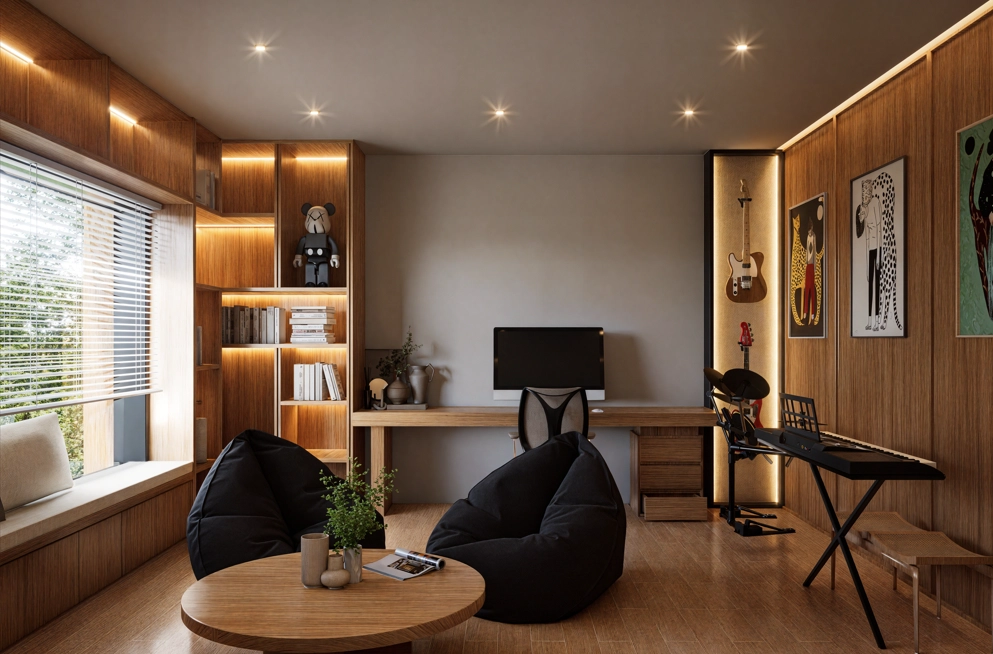
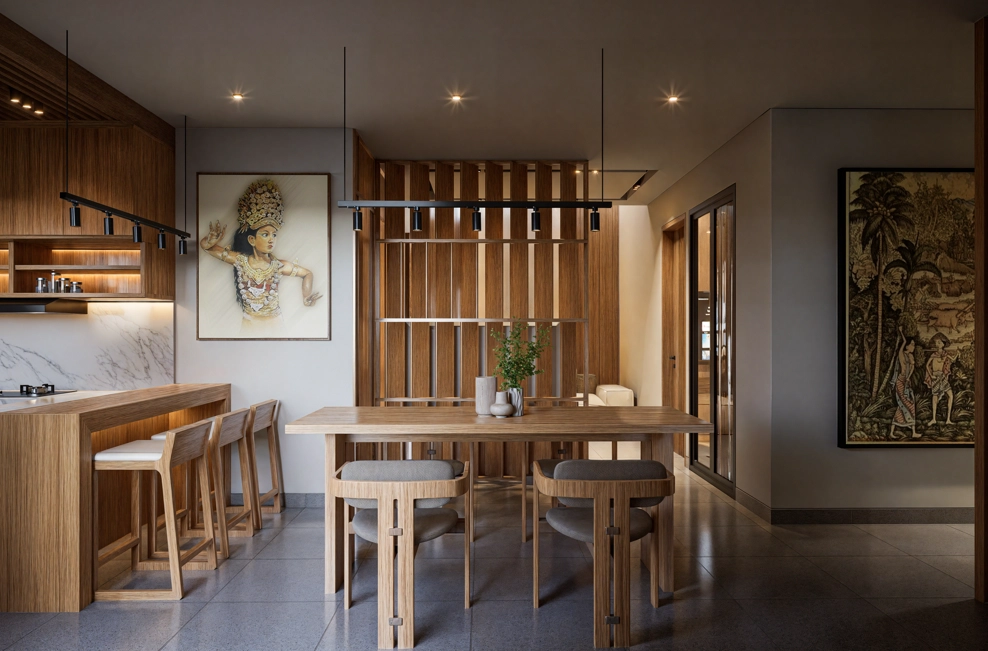
Engga House shows how Japandi principles can translate naturally into a Bali home. Rather than relying on decorative elements to define the style, the design uses a restrained material palette, natural textures, and carefully considered details to create a calm and grounded interior.
The connection between indoor and outdoor spaces further complements this approach, allowing the home’s tropical setting to become part of the interior experience. The result demonstrates how Japandi principles can be adapted to Bali without simply copying a Japanese or Scandinavian aesthetic.
Common Mistakes When Trying Japandi
The most common misstep is treating japandi as a shopping list rather than a discipline. Buying a handful of low wooden furniture pieces and a few ceramic bowls does not create the style if the underlying restraint is missing. A room can be full of the right objects and still feel cluttered if every surface is styled and every shelf is full.
A second mistake is going too cold. The 2020-era version of japandi leaned heavily on beige and black, which can read as sparse rather than calm if the materials do not carry enough warmth or texture. The 2026 direction corrects for this by leaning into richer wood tones, texture, and a touch of terracotta or moss green, which keeps the room feeling lived-in rather than staged.
A third mistake, particularly relevant in Bali, is importing the style without adjusting it for climate. A linen sofa or an untreated timber piece that performs beautifully in a temperate apartment can warp, mildew, or fade quickly in tropical humidity if the materials are not chosen or sealed with that climate in mind. Getting japandi right here means keeping the aesthetic principles intact while swapping in materials that are built for Bali's weather.
Bring Japandi Home
Japandi interior design is not about following a trend; it is about slowing down enough to notice what a space actually needs. Whether you are furnishing a single room or planning a full villa renovation, that same restraint carries through the whole home.
Ready to bring a calmer, more considered feeling into your space? Reach out to Manon Design Studio and let's shape it together.