

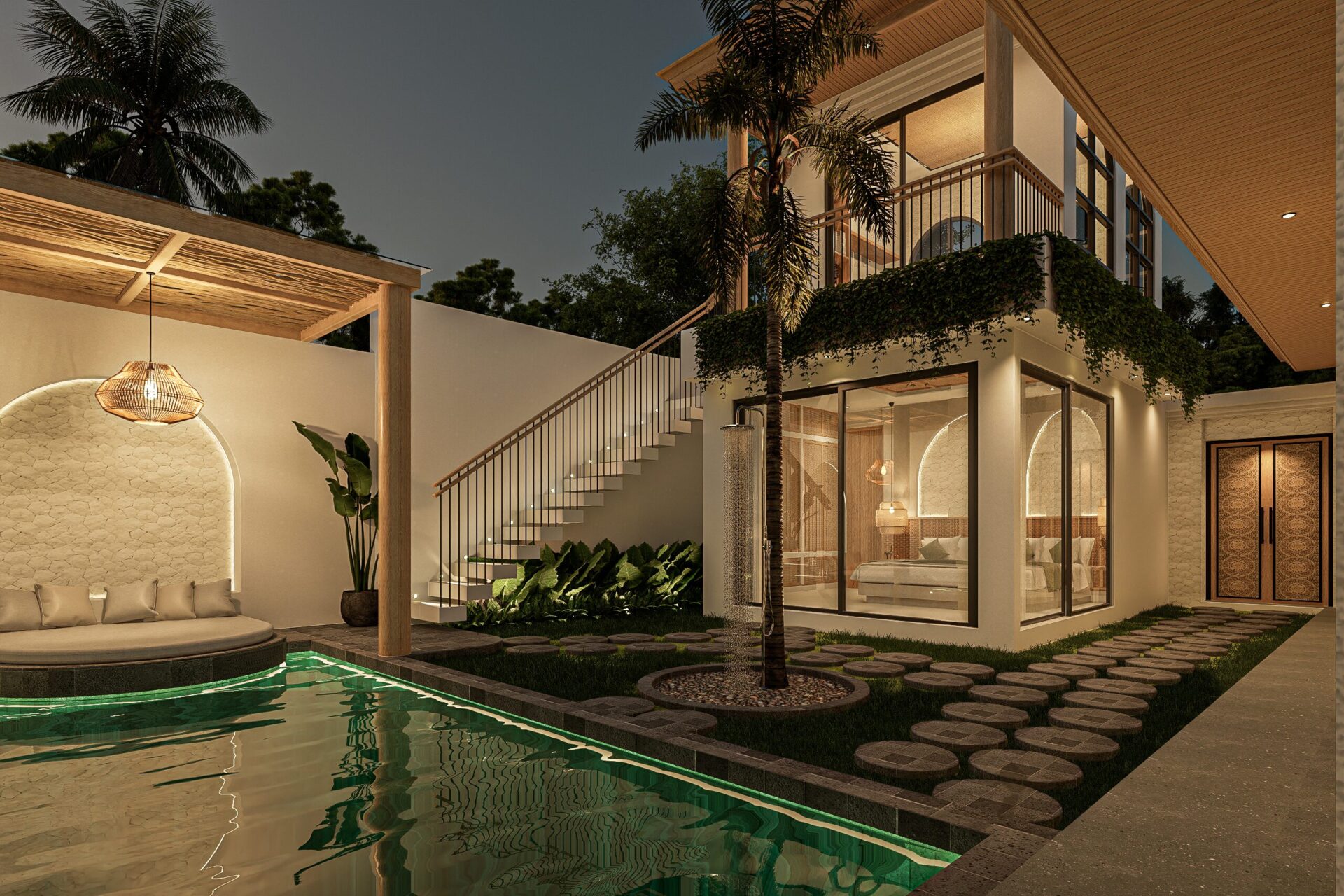
 Lighting is not just functional — it is becoming one of the most expressive, sustainable, and wellness-driven parts of interior design. As designers and homeowners, understanding the latest developments in lighting in interior design can elevate your spaces in meaningful ways.
Let’s talk about it!
The Role of Lighting in Interior Design
Lighting plays a crucial role in interior design, balancing both aesthetics and functionality. Proper lighting does not just illuminate a space, but it guides how we see and feel within it. It enhances architectural features, complements décor, and dramatically influences how colors, textures, and materials are perceived.
Without thoughtful lighting in interior design, even the most beautifully designed spaces can feel flat, uninviting, or confusing. This is because lighting affects not only visual clarity, but also mood, spatial perception, and comfort. Studies in lighting science show that light intensity and distribution significantly impact human experience in interior environments. (Vrindawan University, Lighting Intensity in different area, 2024)
Technical Example
Lighting professionals use the unit lux (lx)—which measures how much light falls on a surface—to plan appropriate illumination for different spaces.
Here are various technical standards and design guides recommend specific lux levels based on function:
Residential Interior (General Guidelines)
- Living Room (Ambient): 100–300 lux — comfortable for general activities and circulation
- Living Room (Task/Reading): 300–500 lux — ideal for reading or focused tasks
- Kitchen (General): 300–500 lux — bright enough for cooking and food preparation
- Bedroom (Ambient): 50–150 lux — creates calm, relaxation-friendly conditions
- Bathroom (General): 300–500 lux — clear lighting for grooming and hygiene tasks
- Hallways/Transitions: 100–200 lux — safe navigation without glare
These recommended levels are widely cited across design references and reflect levels used in professional practice, and maybe you can add these practical tips of lighting in interior design to your home.
What These Numbers Mean in Practice
- A general ambient lighting level (e.g., 150 lux in a living room) supports casual movement and social interactions.
- Task lighting (e.g., 300–500 lux at a reading spot) directs brighter light where detailed activities occur without overwhelming the overall ambiance.
- Stronger lighting (higher lux levels) is crucial in spaces like kitchens and work desks to enhance visual clarity and safety.
Professional designers like Manon do not just achieve these levels by adding more bulbs, but by using layered lighting techniques—combining ambient, task, and accent lighting to create depth, mood, and functional clarity in interiors.
Why Numbers Matter
Standards like those from the Illuminating Engineering Society (IES) and referenced industry benchmarks ensure that lighting is:
- Functional — enough light where it is needed
- Comfortable — reducing glare and eye strain
- Aesthetic — supporting material and color presentation
- Healthy — aligned with human circadian rhythms and visual comfort
In essence, lighting design integrates technical standards with creative expression. When lighting in interior design is thoughtfully planned using measured lux levels and layered lighting strategies, your interiors become spaces that are both practical and visually inspiring.
Also Read: Architectural Character: The Soul of Space
Lighting Design in Tropical Contexts
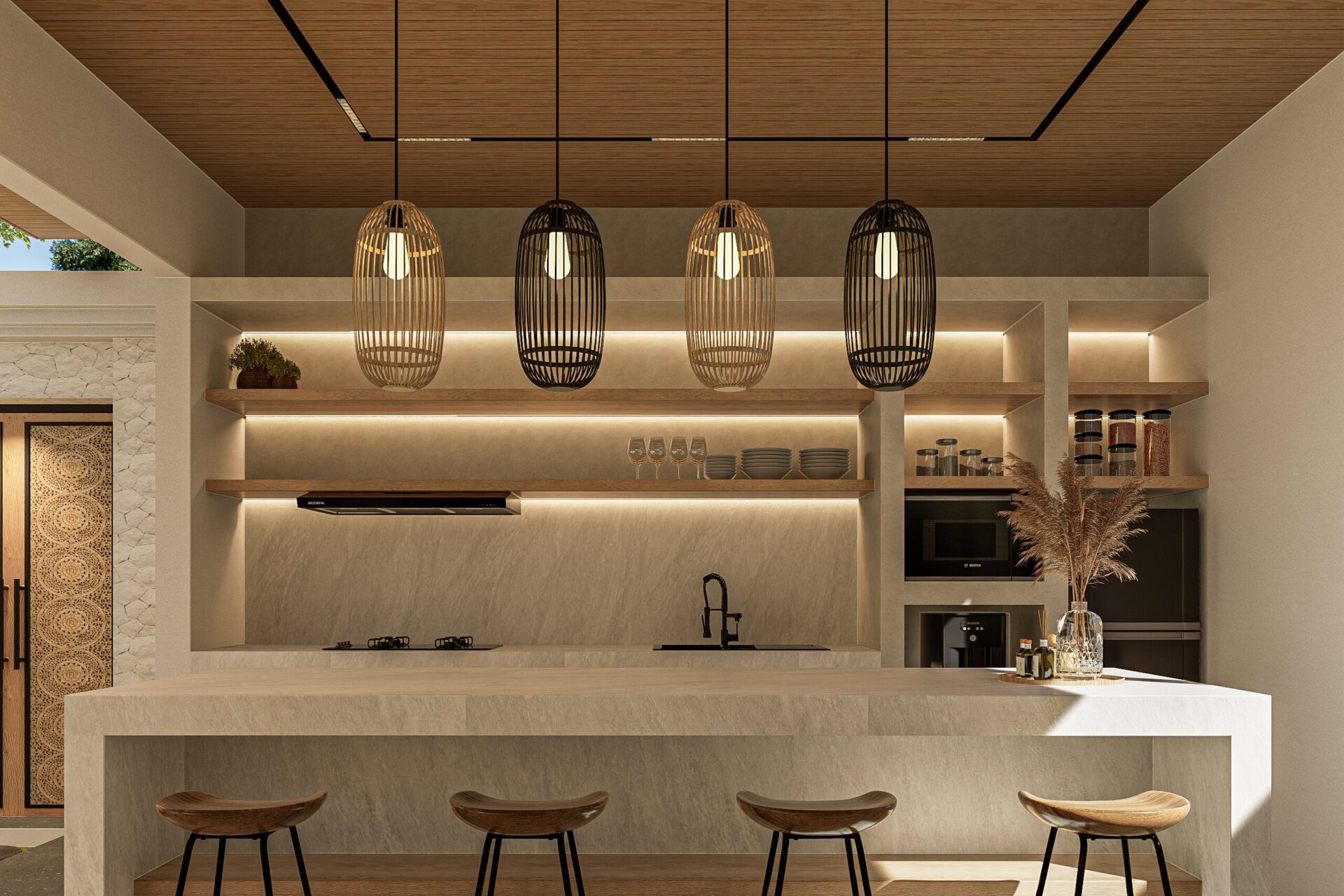
Lighting in a tropical place like Bali is a very different conversation. Here, the challenge is not lack of daylight — it is how to manage too much daylight, heat, glare, and material response. Bali’s climate delivers strong, consistent sunlight year-round, and if lighting is not thoughtfully designed, your interiors can feel washed-out, uncomfortable, or overheated.
As architectural lighting pioneer William M. C. Lam often emphasized, “light and shadow are formgivers in architecture,” meaning lighting does not just reveal space, but it shapes how we experience it. His work reminds us that good lighting in interior design is about relationships, not just quantity of light.
Tropical Lighting Challenges in Bali
In Bali, direct midday sun can easily exceed 2,000 lux on interior surfaces, far above comfort levels for most residential or hospitality spaces. Unfiltered daylight at these intensities can create glare, uneven brightness contrasts, and rapid fading of materials.
Local research on tropical buildings confirms this: a study measuring daylight inside a villa in a tropical climate found varied illuminance — some bedrooms receiving nearly 700–760 lux, while others dropped below 300 lux due to orientation and shading differences, highlighting how orientation and openings dramatically influence daylight quality. (JIDAR: Jurnal Ilmiah Urban Desain dan Arsitektur, Optimalisasi Pencahayaan Alami pada Iklim Tropis, 2025)
Lighting in interior design here must do three things at once, including:
- Control overexposure
- Diffuse light comfortably
- Prevent excess heat gain
This is why Bali designers place heavy emphasis on filtered light through shading devices, deep overhangs, and screens, not just big glass windows. And our expert team truly understands this part when building your dream space.
Material Reflectance and Light Behaviour
Not only concerning the lux, tropical interiors often use rich natural materials like teak, volcanic stone, bamboo, and plaster.
Darker materials naturally absorb light and can make a space feel dim unless daylight is managed effectively. Conversely, very light finishes can reflect too much light, causing glare. In practice, successful tropical interiors balance these material characteristics so that both natural and artificial light play nicely off surfaces.
Studies of daylight comfort in tropical room interiors also demonstrate that without thoughtful orientation and openings, spaces may fail to meet basic illuminance comfort thresholds and require artificial lighting even during the day.
Daylight Overexposure: A Common but Overlooked Issue
Here is the thing: too much daylight is not always a blessing in lighting in interior design. Strong, unfiltered sunlight can create visual discomfort and glare that reduces visual performance and irritates occupants.
International research shows that daylight performance must be measured with climate-based metrics like Useful Daylight Illuminance (UDI), which balances useful light levels with overexposure. (National Academic Journal of Architecture, SIMULASI PENCAHAYAAN ALAMI SIANG HARI TERHADAP DESAIN FASAD (STUDI KASUS: GEDUNG LABORATORIUM TEKNIK ELEKTRO UNIVERSITAS MALIKUSSALEH), 2022)
In balanced tropical lighting strategies, an expert like Manon always aim for useful daylight ranges and visual comfort, not just maximum brightness. We often target mid-day high light levels in the range of 300–1,000 lux indoors depending on space we will use, adding artificial layers only where daylight cannot achieve visual comfort.
Blending Natural and Artificial Light the Right Way
In tropical settings, good lighting in interior design is not a choice between natural or artificial light, but it is about how they interact harmoniously throughout the day.
Leading lighting standards — such as those advocated by the Illuminating Engineering Society (IES) — recommend combining layered lighting (ambient, task, accent) to support human activity while avoiding glare, flicker, or uncomfortable contrasts.
The IES mission is to translate lighting knowledge into better environments, and its guidelines emphasize illuminance, distribution, color rendering, and visual comfort as core components of good design.
Warm artificial light (around 2700–3000K) is often chosen in tropical interiors to complement natural daylight and foster a relaxed, calming mood after sunset. Unlike harsh or overly bright lighting in interior design, layered systems help maintain a cohesive atmosphere that feels alive rather than harsh.
Why This Requires Professional Judgment
From now on, you might think lighting in tropical climates is too complicated. Do not worry! You do not have to count lux or understand climate patterns, building orientation, material behavior, and human perception.
Because all these good lighting in interior designs can be handled by Manon Design Studio. Things like…
- Manages sun movement and glare
- Balances diffused daylight + artificial layers
- Uses shading strategies to protect comfort
- Aligns with how daylight changes throughout the day
Our designers know that in Bali, lighting must be adaptive so that your spaces feel comfortable, cohesive, and beautiful at all hours.
Types of Lighting in Interior Design
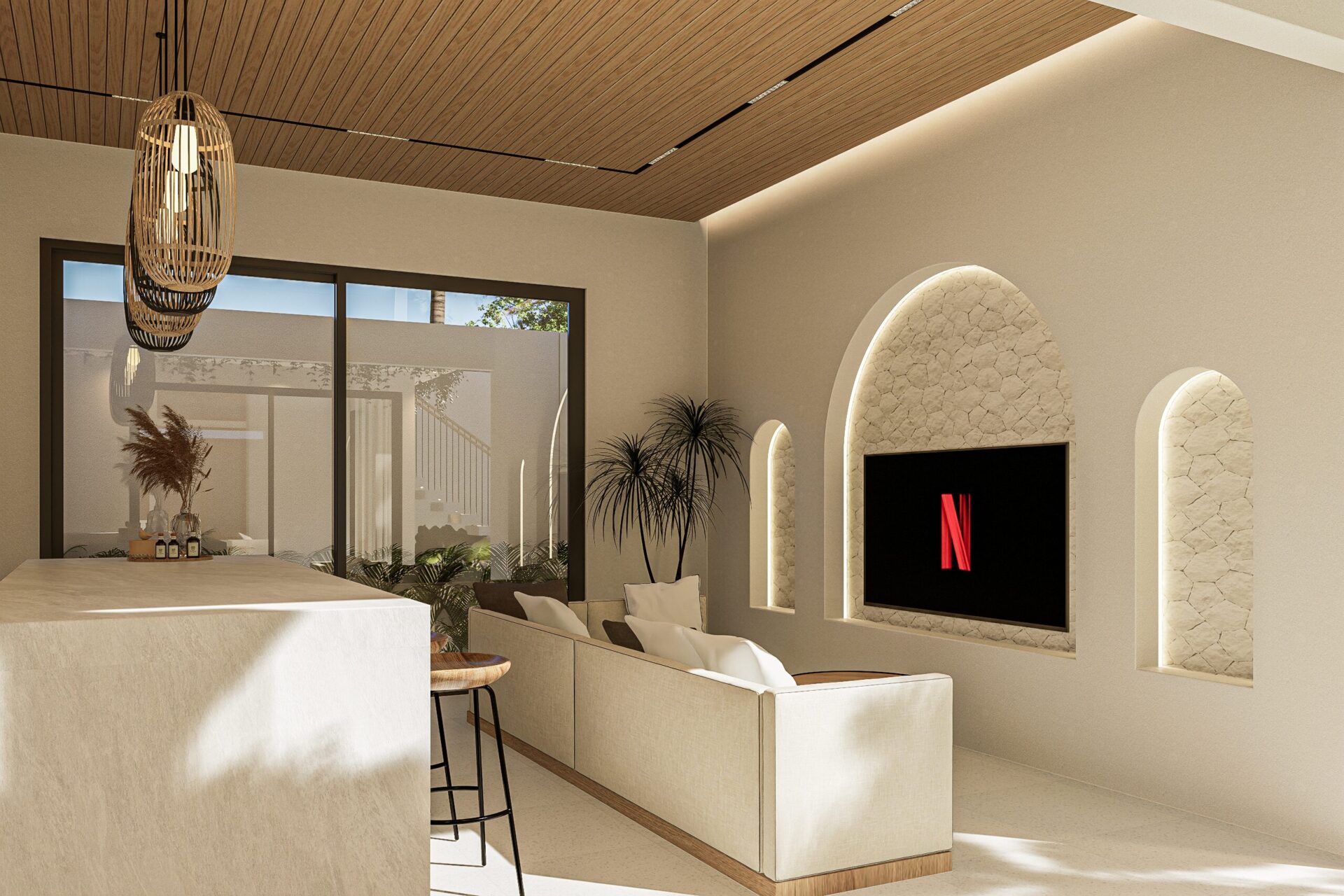
Effective interior design relies on layering different types of lighting to serve multiple purposes, such as:
1. Ambient Lighting
It provides the overall illumination of a space. It creates a foundation for all other types of lighting and establishes the room’s mood. Examples include ceiling-mounted fixtures, chandeliers, and recessed lighting.
2. Task Lighting
This type of lighting in interior design is focused on specific activities, such as reading, cooking, or working at a desk. Desk lamps, pendant lights over kitchen islands, and under-cabinet lighting are common examples. This type of lighting ensures both functionality and comfort.
3. Accent Lighting
It highlights architectural features, artwork, or decorative elements. It adds depth and dimension to a room, making it more visually engaging. Track lighting, wall-mounted fixtures, and LED strips are popular ways to incorporate accent lighting.
Simple Tips to Make Lighting in Interior Design Delightful and Inviting
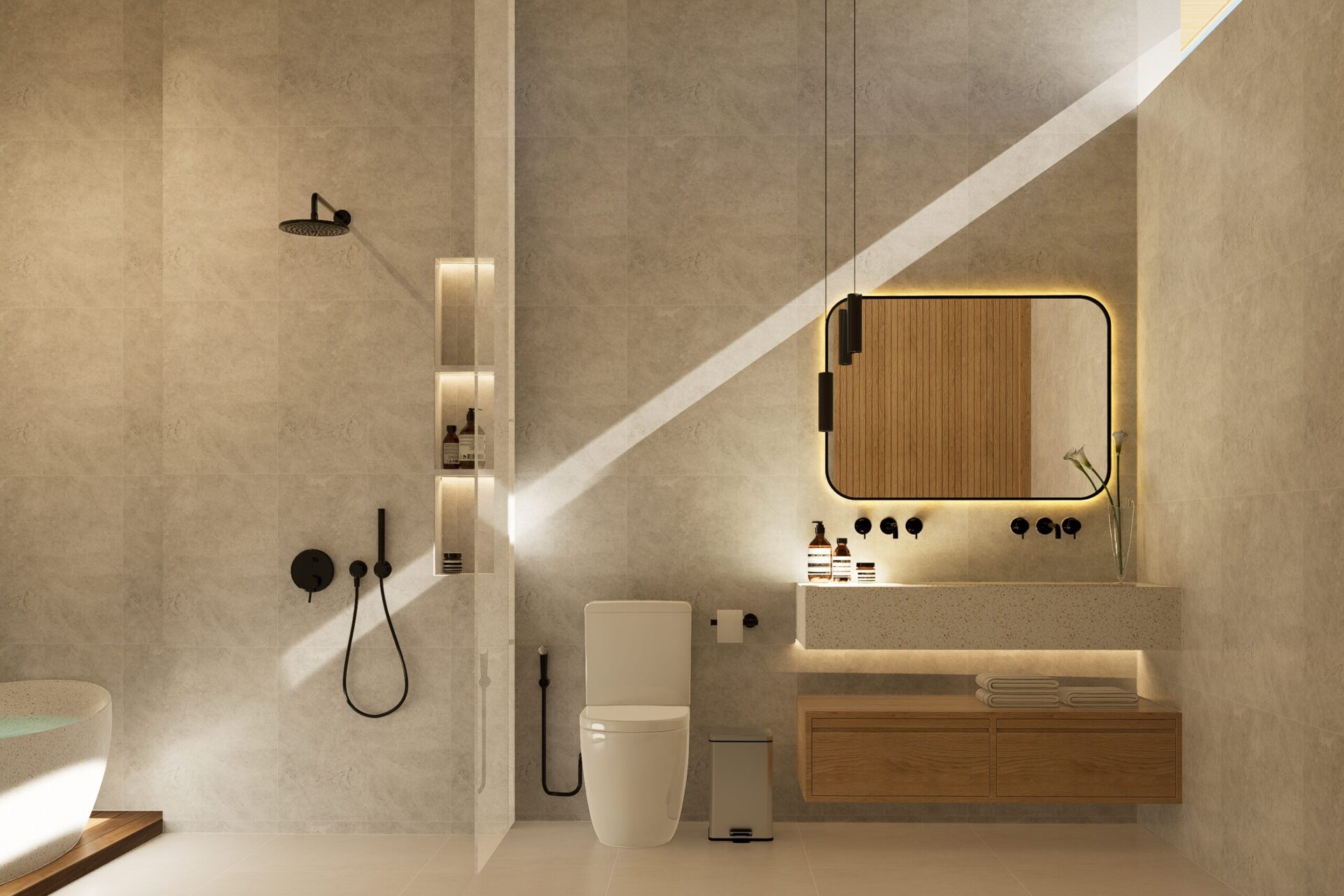
1. Layering Light for a Balanced Space
It is truly the secret to achieving successful interior lighting. By thoughtfully combining ambient, task, and accent lighting, you create spaces that are not only functional but also adaptable to different moods and activities throughout the day.
Layered lighting in interior design transforms a room, allowing it to flow seamlessly from work to relaxation, from bright mornings to cozy evenings, while maintaining visual balance. It ensures that every corner feels intentional—never too dark, never too harsh—helping your space feel welcoming, harmonious, and alive.
When lighting is layered with care, it elevates the design, highlights key features, and creates an environment where every moment feels intentional and inspiring.
2. Color Temperature and Mood
The color temperature of your lighting plays a crucial role in shaping a room’s ambiance:
- Warm Light (2700K–3000K): Fills a space with a cozy, inviting glow—perfect for living rooms and bedrooms where relaxation is key.
- Cool Light (4000K–5000K): Promotes focus and alertness, making it ideal for workspaces, kitchens, or areas where productivity matters.
Choosing the right color temperature does not just set the mood—it enhances comfort, complements your design, and ensures each space functions exactly as intended. Thoughtful lighting transforms a room from ordinary to extraordinary.
Also Read: Need a Calm Home? Try Mediterranean Interior Design
3. Integrating Natural Light
Natural light is one of the most powerful tools in interior design. It strengthens the connection between indoor and outdoor environments, enhances mood, and reduces energy consumption. Strategically placed windows, skylights, and reflective surfaces can maximize daylight, creating bright and uplifting interiors while complementing artificial lighting solutions.
4. Lighting as a Design Feature
Lighting in interior design fixtures are not just functional—they can be statement pieces. From sculptural floor lamps and elegant pendant lights to embedded LED strips, fixtures can serve as decorative elements while providing essential illumination. Incorporating stylish lighting into your design enhances the room’s overall character and reinforces the interior theme.
Also Read: Modern House Exterior: The Secret of Stunning Beauty
Mastering lighting in interior design is essential for creating spaces that are functional, beautiful, and memorable. Thoughtful lighting enhances architectural features, highlights key décor, and sets the perfect mood for every environment.
For expert guidance on designing your dream interiors, connect with Manon Design Studio. Based in Bali and established in 2014 by architect Brahasata Indra, the studio specializes in creating spaces where nature and people coexist harmoniously.
Let us help you bring your vision to life. Nature Inspired, Brand Defined. For inquiries, do not hesitate to contact us.