Most people think minimalist interior design is basically about stripping your home until it looks like nothing is left. That fear is real: many readers worry a “minimal” space will end up feeling cold, impersonal, or even lifeless.
Here’s the better way to think about it. Minimalist interior design is not about maximum emptiness. It’s about purposeful selection, where you keep what’s truly needed and important, and remove what doesn’t earn its place.
Minimalism is purposeful editing
At its core, minimalism is about editing your space the way you would edit a story. You keep what you love, what supports your day-to-day life, and what makes the room feel right. After that, you remove the rest instead of letting it pile up “just in case.”
It helps to separate the aesthetic from the mindset. The minimalist look might show up as clean lines, neutral or monochromatic colors, and limited decorative objects. Still, the deeper “Research on minimalism and voluntary simplicity describes the approach as reducing consumption and excess in order to focus more intentionally on personal values (Hook et al., 2023).minimalist way of living” is about being mindful and intentional with consumption.
So the room isn’t just styled once and left alone. It’s designed to match how you actually live, including functional storage that keeps things from turning into everyday clutter. People often mix up “fewer things” with “no comfort,” but minimalism can still feel warm, personal, and lived-in.
Once the principles are in place, the visual clues become pretty recognizable. You’ll usually see simple lines, a limited furniture selection, and open floor plans that help the room feel spacious. Natural light plays a major role too, because it makes the design feel airy rather than shut-in.
Why it can look different across cultures
Minimalist interior design isn’t limited to one country or one interpretation. Minimalist interiors can take different forms depending on cultural context, lifestyle, materials, and personal preferences, while still maintaining the same focus on simplicity and intentionalityWhile Western minimalism often reads as white walls and a few key pieces, the underlying impulse is broader. In many communities, simplicity can come from necessity, mobility, or long-standing values around what’s essential.
That’s why minimalism can adapt without losing its identity. Even a bright accent color can still fit if the room stays purposeful, uncluttered, and true to the person living there. With that in mind, the next question becomes clear: why do so many people want this kind of calm in the first place?
Why people choose it for their homes
I want my home to feel calmer, but I’m not sure minimalism is worth it. That doubt usually comes from imagining it as “less stuff” without thinking about what problem it solves.
When you chase trends, you end up replacing things often. That can feel like a loop of buying, updating, and then storing the leftovers.
Minimalist interior design leans toward a back-to-basics mindset. The goal is to reduce unnecessary consumption, and to ask “I know I can buy this, but should I?” The result is a home that feels steadier over time, not constantly refreshed for appearances.
Cluttered energy vs eye-resting calm
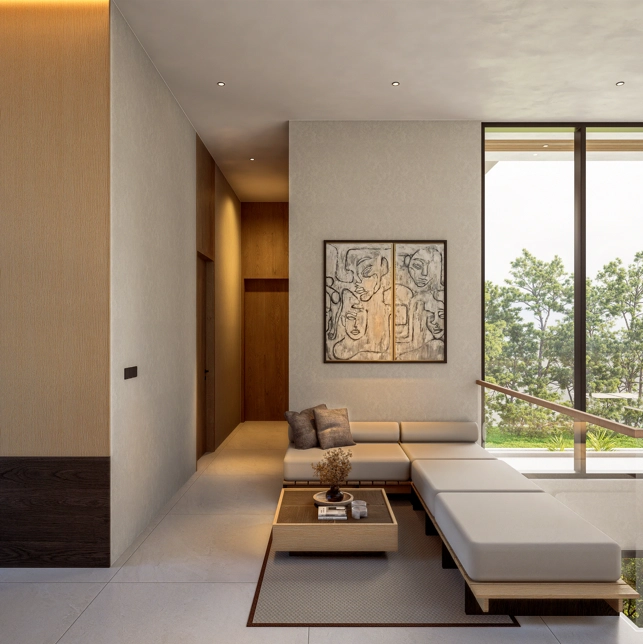
Visual clutter has been associated with higher levels of stress, which may help explain why more intentionally edited spaces can feel calmer and easier to navigateToo much visual clutter makes your eyes work overtime. You notice mess sooner, stress comes faster, and even relaxing feels harder.
Minimalist interiors aim to give your eye somewhere to rest. Clean lines, limited decorative objects, and natural light contribute to a calmer experience that doesn’t feel high-energy. Since it’s based on purposeful editing, the next step is understanding how that edit is actually made in a room.
How minimalist spaces are designed
Minimalist interior design is a deliberate workflow, not a look you accidentally fall into. The “minimal” effect comes from editing decisions you repeat until the room feels calm, usable, and intentional.
1. Edit first, then decide
Start by figuring out what the space really needs. Ask yourself, “What can I get rid of that I don’t need?” Then remove it, even if you feel tempted to keep things “just in case.”
Once you’ve edited, you’re not left with random space. You’re left with a clearer plan for what should stay. That curated feeling is why minimalism often reads like a room that’s been well edited and well thought out.
2. Choose a restrained palette and let it breathe
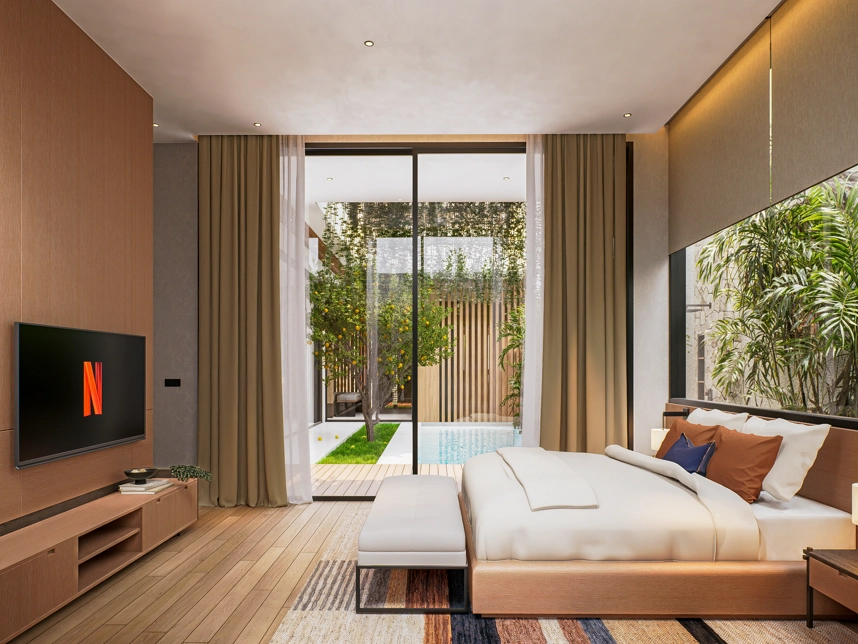
Next, pick a simple color direction, often neutral or monochromatic. The point isn’t sameness. It’s creating a visual calm so your eye can rest instead of constantly scanning for differences.
After that, let materials create depth. Natural textures and subtle variation keep the room from looking flat. A similar approach can be seen in our Mariposa House, where a restrained palette and natural material textures create visual depth without adding unnecessary decoration.
A common confusion is assuming minimalism means no personality, but identity can still show through the few chosen elements.
3. Make function do the heavy lifting
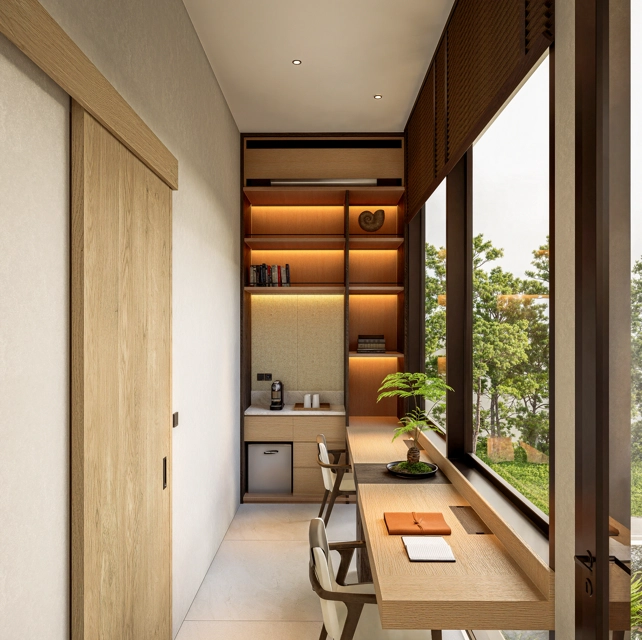
Now build around everyday use. Furniture and layout should serve real habits, not just aesthetics. When function is strong, the room stays uncluttered without feeling bare.
Creative storage becomes the quiet engine here. Storage solutions help keep surfaces clear, which is the only way minimalism holds up in daily life. If you skip storage planning, clutter returns fast.
4. Use light to reveal the design
Light changes everything in a minimalist home. Natural light makes the space feel open, and it also highlights clean lines and the textures you chose on purpose.
Limited natural light and too many visual distractions can make a minimalist room feel heavier or more enclosed. If a room feels heavy, it usually means you blocked the light or added too many visual distractions. Since minimalism makes everything visible, light also exposes flaws, so the design has to be intentional from the start.
5. Curate a few meaningful focal points
Finally, choose a small set of decor or art that earns attention. These objects act like punctuation in a sentence. Too many details, and the sentence stops making sense.
With that mechanism in mind, the next section applies the same logic at home, starting from the practical workflow you can actually follow.
What’s next after you simplify?
Minimalist interior design isn’t a one-time makeover. It’s ongoing editing, based on how your life actually changes. Your space stays minimal when your decisions stay mindful.
Trust your vision, your taste, and your timeline. Curate patiently, room by room, because the “finished” feeling can take time and often happens gradually, not all at once.
With a little patience, you’ll notice the real win is not perfection. It’s a home that keeps supporting you, calmly improving as you go.
At Manon Design Studio,, we provide a tailored approach to turn your Minimalist Interior Design vision into reality. Contact us today, talk with our team, and get your tailored plan today.