


Most of us spend nearly 90% of our day indoors, often without realizing how deeply our surroundings influence our mood, energy, and performance. When spaces lack natural elements, stress rises, focus slips, and motivation fades, quietly limiting our potential. This aspect is where the impact of biophilic design on productivity becomes evident.
Biophilic design reintroduces nature into the places where we work, think, and live, creating environments that restore clarity and support overall well-being. Instead of feeling drained by artificial settings, people feel more energized, engaged, and balanced.
In this article, we will briefly discuss the profound impact of biophilic design on productivity and explore why this nature-inspired methodology is shaping the future of healthy, high-performing environments.
Let's dive in!
What Is Biophilic Design?
Biophilic design is more than adding plants; it is a thoughtful way of bringing nature’s patterns, textures, light, and atmosphere into the spaces we use every day. This approach transforms environments into places that feel calmer, clearer, and more human-centered.
Picture walking into a room with warm, natural materials, soft daylight, and the subtle sound of water. Instantly, your body relaxes. These sensory cues do not just elevate mood; they also contribute directly to better focus, comfort, and overall performance.
“Research even shows that natural elements can support healing and reduce stress, especially in healthcare environments.”
When we embrace biophilic principles, the impact of biophilic design on productivity becomes undeniable. Spaces become healthier, thinking becomes sharper, and people naturally thrive. Ultimately, it is about creating environments that reconnect us to nature and help us feel and perform at our best.
The Impact of Biophilic Design on Productivity and Well-Being

The impacts of biophilic design are broad. What are they? Let's take a look at the full explanation!
1. Enhanced Well-Being and Mental Health
Decades of research in neuroscience, psychology, and spatial design reveal something powerful: when people reconnect with nature, every part of their performance improves.
Here are some of the most compelling insights:
- Natural light boosts concentration and mood, helping office workers stay focused longer and feel more satisfied throughout the day.
- Workplaces that adopt biophilic principles experience up to 26% higher cognitive scores, proving that nature-inspired environments directly elevate mental performance.
- Patients recovering in hospital rooms with views of nature show faster healing and lower stress levels, indicating nature’s profound psychological influence.
- Indoor greenery has been found to lower stress hormones, stabilize emotions, enhance oxygen quality, and increase overall well-being.
All of these point to one undeniable truth: the impact of biophilic design on productivity is profound. Spaces that celebrate nature simply help people work, think, and live better.
For design inspiration, take a look at our biophilic architecture work here.
2. Boosts Brainpower
The human brain is biologically wired to respond positively to nature. Elements like water, sunlight, greenery, and natural textures activate the parasympathetic nervous system, our body’s natural “rest and restore” mode.
Scientific studies highlight several key benefits:
- A 14% improvement in short-term memory when biophilic elements surround individuals.
- Lower cortisol levels, thanks to natural soundscapes, gentle airflow, and organic visual cues.
- Increased creativity is triggered by organic shapes, fractal patterns, and natural textures, which stimulate the brain in ways that rigid, artificial environments do not.
- Improved concentration and mental clarity, especially in spaces that combine natural light with thoughtful material selection.
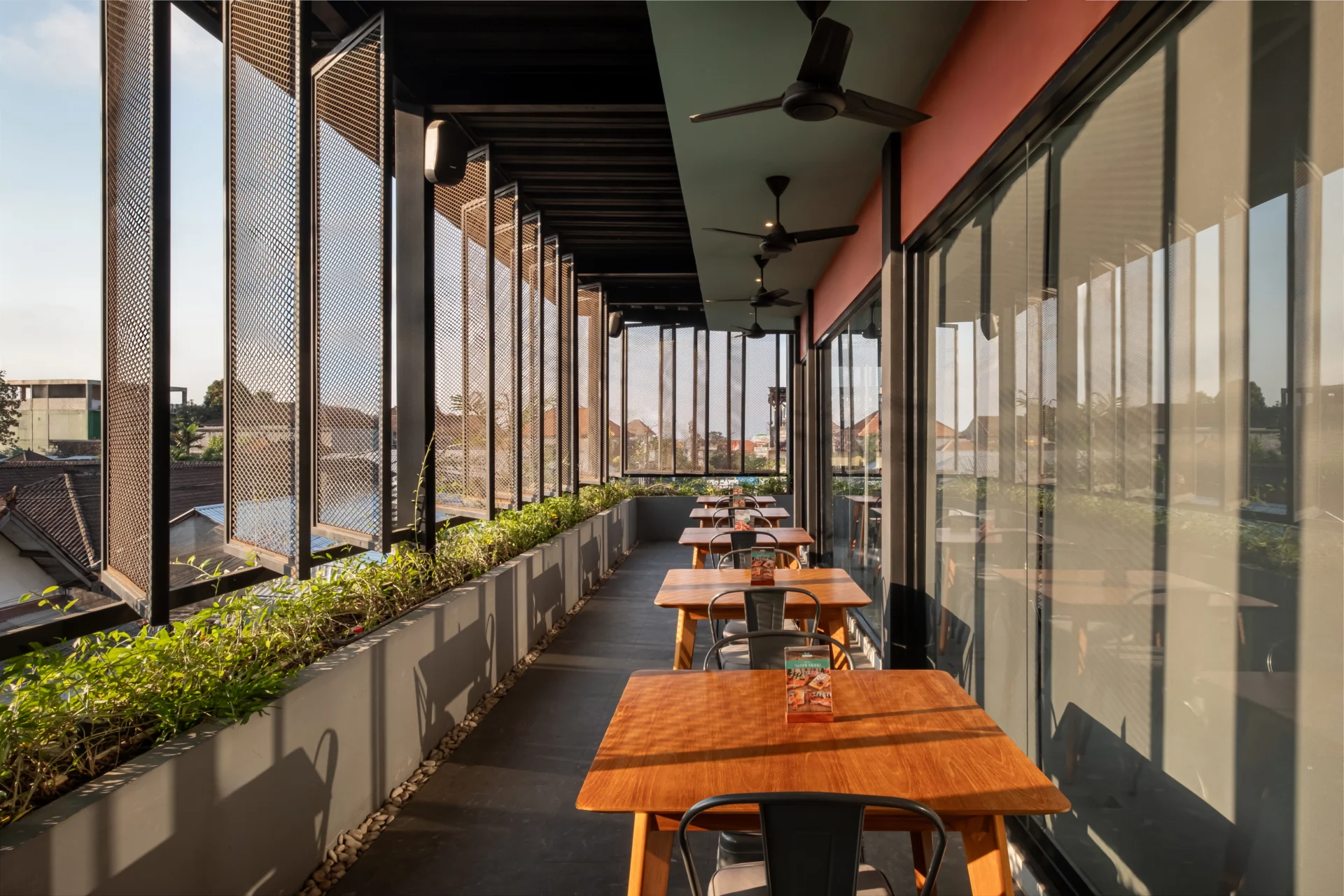
You can experience the impact of biophilic design on productivity by visiting one of our projects. At Mapogu Bali, we adopted a mixed-use approach that combines coworking spaces with a high-view dining area using biophilic architectural principles.
Mapogu Bali blends playful geometric forms with natural materials like stone and terracotta, creating a space that feels warm and inviting. With open layouts, large windows, and greenery throughout, the design naturally connects indoor and outdoor areas.
See Mapogu Bali for more details.
3. Physical Health Improvements
The impact of biophilic design on productivity moves beyond feeling good; it is deeply rooted in physical health and restorative biology, too, including:
a. Elevated Sleep Quality
Say goodbye to restless nights. Natural light exposure is scientifically proven to regulate your body's circadian rhythms (your internal clock), leading directly to better, deeper sleep quality and improved daytime energy.
b. Superior Indoor Air Quality
Breathing easier is non-negotiable. By strategically incorporating living plants around our buildings, we actively improve indoor air quality. Plants function as natural filters, absorbing pollutants and releasing fresh oxygen, thereby dramatically reducing common issues such as:
- Respiratory problems
- Headaches
- Chronic fatigue
c. Accelerated Healing and Recovery
The connection between nature and the body's repair mechanisms is powerful. Access to natural daylight and unobstructed views of the outdoors has been consistently associated with faster recovery rates and reduced stress in various settings, supporting the body's natural healing process.

At our Taupe Botanica Villa, the impact of biophilic design on productivity can truly be felt. The space is designed not only to help residents feel more relaxed, but also to support productivity and overall well-being by encouraging rest and recovery.
If you are looking for a place where you can fully focus on your work while still feeling at ease, staying in a property like this can make a real difference.
Here, each villa is created with modern comfort in mind, while remaining calm and grounded through thoughtful natural details. A private pool with a waterfall, sunken living areas, and spacious bedrooms help blur the boundaries between indoors and outdoors.
Read more about our design here.
Key Principles of Biophilic Design That Improve Productivity

The biophilic design that we build in Bali goes far beyond adding plants indoors. In a tropical context, productivity is shaped by how well architecture works with wind, rain, intense daylight, and open space — not against them.
When these forces are understood and designed intentionally, spaces become calmer, healthier, and more supportive of focused human activity.
To make this vision come true, here are some key principles our team uses to help clients achieve their goals—especially those who value the impact of biophilic design on productivity within their spaces:
1. Natural Light and Ventilation
Sunlight is one of the most powerful natural stimulators for the human mind. It regulates our internal clock, lifts our mood, and eases mental fatigue. When paired with thoughtful cross-ventilation, spaces feel fresher, oxygen-rich, and naturally energizing, perfect conditions for clear thinking.
2. Working With Wind, Not Sealing It Out
In Bali, natural airflow is one of the most powerful — and often underused — productivity tools. Buildings that allow cross-ventilation, shaded openings, and breathable layouts reduce heat buildup and improve comfort without relying heavily on air conditioning.
Important note: When people feel physically comfortable, mental fatigue drops, and focus improves naturally.
This is why traditional Balinese structures rarely feel stagnant in our hands; they breathe. Modern interpretations that respect wind paths create work and living environments that feel fresh, alert, and grounded throughout the day.
3. Organic, Earth-Based Materials
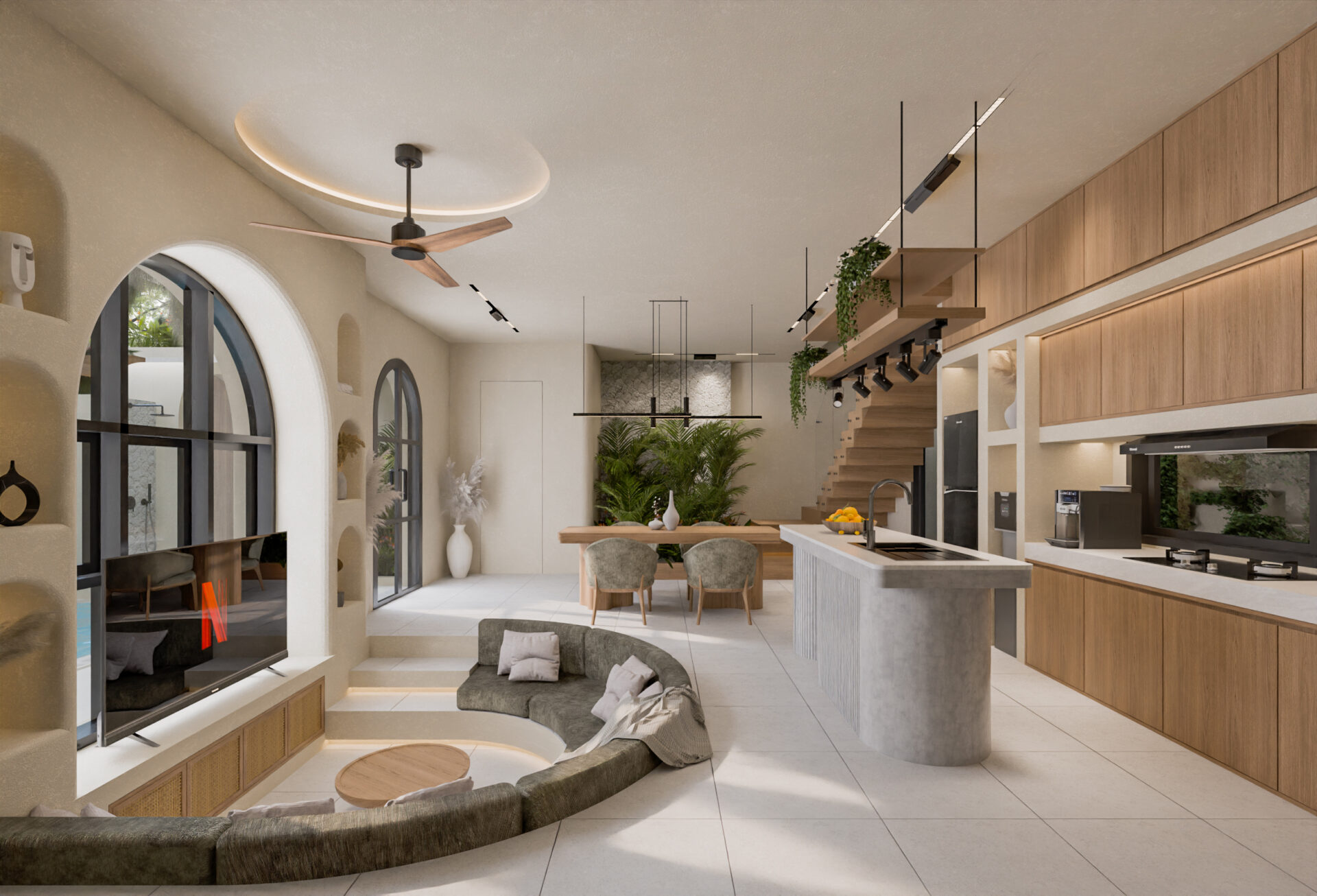
Materials such as wood, stone, bamboo, rattan, and natural fabrics introduce warmth and authenticity to a room. They create interiors that feel grounded and emotionally restorative, reminding us of the textures and comfort found in nature.
4. Courtyards and Natah as the Heart of Focus
One of Bali’s strongest spatial contributions to biophilic design is the courtyard, traditionally known as the natah. More than a visual feature, the natah acts as a climatic and psychological anchor — bringing light, air, greenery, and spatial relief into daily life.
In modern work or mixed-use environments, courtyards improve productivity by:
- Reducing visual stress
- Offering moments of mental reset
- Improving air circulation and daylight distribution
From here, we take note that people do not need to leave the building to reconnect with nature because it is already at the center of their spaces.
5. Pavilions and Spatial Separation for Mental Clarity
Balinese architecture traditionally separates functions into pavilions, rather than compressing everything into one enclosed volume. This separation creates clear mental zoning — a powerful but subtle productivity tool.
This gives you an impact of biophilic design on productivity,y which this principle translates into:
- Clear distinction between focused work, social interaction, and rest
- Reduced noise and visual distraction
- Stronger sense of purpose in each space
As we mentioned, when space is legible, the mind is calmer.
Also Read: The Power of Biophilic Architecture for Well-Being
6. Local Plant Strategy, Not Decorative Greenery
True biophilic design in Bali uses local, climate-adapted plants, not imported greenery that requires high maintenance. Native plants respond better to rainfall patterns, heat, and humidity, and they age naturally with the architecture.
Beyond aesthetics, local vegetation that helps you for getting these benefits, including:
a. Trees and Structural Plants
These provide shade, vertical layering, and stability — important for microclimates and comfort (cooling, airflow, shade):
- Breadfruit (Artocarpus altilis)
- Jackfruit (Artocarpus heterophyllus)
- Pandanus (Pandanus tectorius)
- Small shade trees (e.g., Ketapang/Terminalia)
b. Tropical Flowering and Feature Plants
These bring color, seasonal interest, sensory appeal (fragrance, texture), and cultural resonance to increase the impact of biophilic design on productivity:
- Frangipani (Plumeria spp.)
- Heliconia spp.
- Hibiscus (Hibiscus rosa-sinensis)
- Ixora (Soka)
- Bougainvillea
- Shampoo Ginger (Zingiber zerumbet)
c. Foliage, Texture and Understory Plants
These help create the lush, layered feeling essential to biophilic design, supporting humidity regulation and visual interest:
- Ferns – great in shaded or moist areas; add soft, natural texture.
- Cordyline / Dracaena – colorful foliage, low-maintenance, works as a mid-height accent.
- Groundcovers (e.g., Wedelia, mini grasses) – help keep soil moisture and create smooth transitions between plant layers.
- Calathea and Maranta – patterned foliage for shaded zones, contributes to biodiversity and visual softness.
d. Palms and Large Architectural Elements
Use palms or structurally bold plants to anchor spaces, define outdoor rooms, and provide vertical interest without heavy shading that blocks airflow:
- Areca Palms – classic tropical silhouette and good for both outdoor and large indoor atriums.
- Red Palm (Cyrtostachys renda) – vibrant foliage adds seasonal contrast and identity to the landscape.
This connection to the local landscape subtly strengthens emotional comfort — an often overlooked factor in long-term productivity.
7. Nature-Inspired Spatial Flow

Spaces shaped by curves, organic forms, and soft fractal patterns feel more welcoming by instinct. This gentle, nature-influenced flow mirrors natural landscapes, making interiors feel safer, more intuitive, and effortlessly soothing.
Together, these principles of impact of biophilic design on productivity elevate environments into calmer, healthier, and more productive places where people can naturally perform at their best.
Let’s Return to Harmony With Manon Design Studio!
At Manon Design Studio, we do not just design buildings; we craft environments that honor the natural world while significantly elevating modern living and working. Guided by our philosophy, "Nature Inspired, Brand Defined," every project is shaped with intention, ensuring that your space maximizes the impact of biophilic design on productivity and overall well-being.
Whether you are designing a home, a workplace, or a commercial sanctuary, nature is an essential partner in the conversation.
If you are ready to create a space that measurably enhances productivity, well-being, and soulful living, we are here to design it with you.