

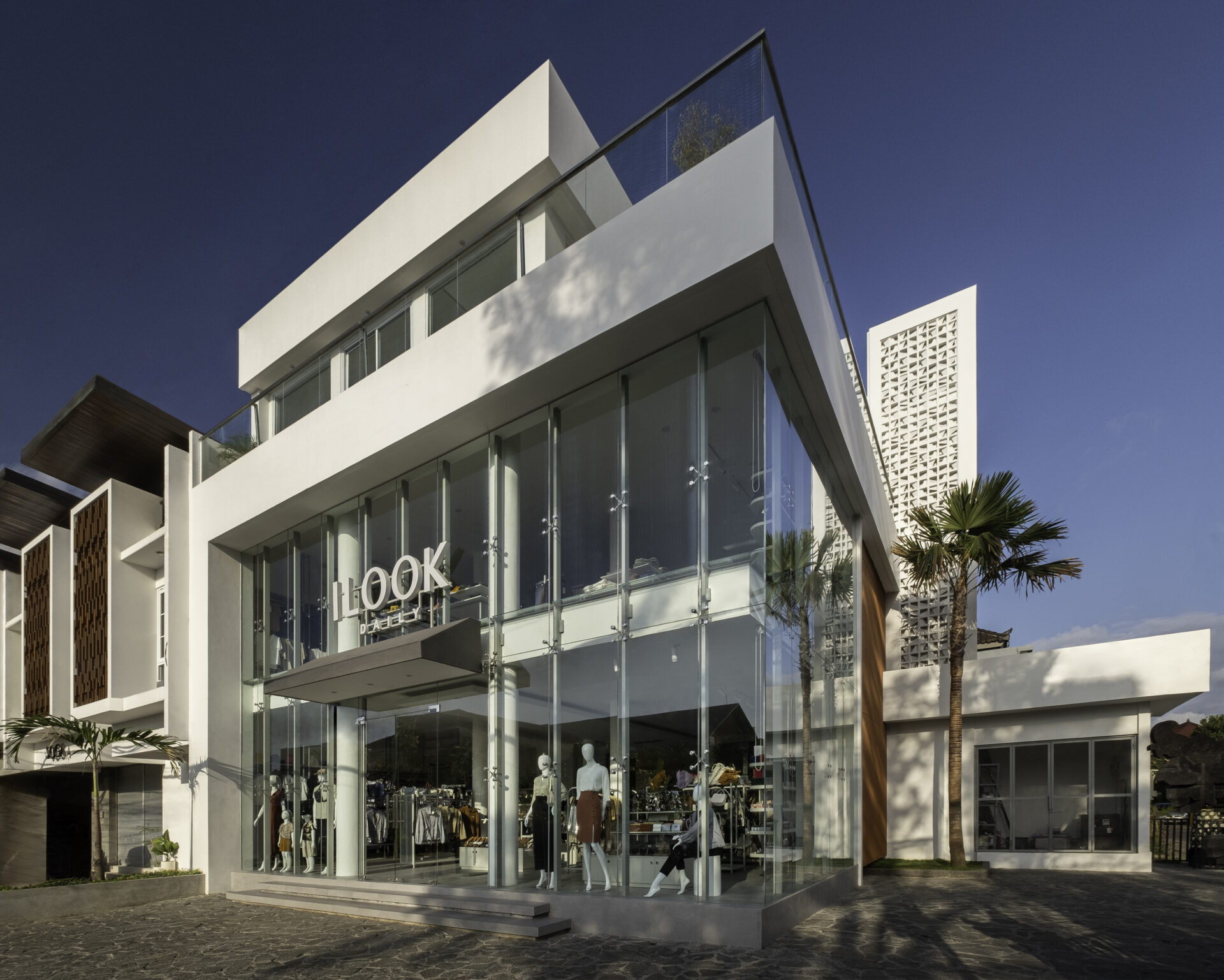
Households and storefronts have long shared a single footprint in many Southeast Asian cities, giving rise to the iconic shophouse design.
For designers, developers, and anyone curious about urban character, shophouse design offers a compelling study in mixed-use efficiency, climate-smart strategies, and enduring cultural expression.
In this article, Manon will walk you through how it evolved, why it still matters, and how a Bali-based studio like Manon Design Studio applies those lessons when crafting modern, place-sensitive work.
Let’s get started!
Origins and the DNA of the Shophouse Design
This form emerged as a practical response to narrow street frontages and dense trade corridors. Early examples combine commercial activity at street level with private living quarters above, and they often include features like deep floor plans, verandas, and covered walkways.
These elements are not decorative accidents — they are climate adaptations and social instruments that shaped daily life.
Colonial Influence to Modern Adaptation
Over the decades, local designs absorbed influences from Chinese, Malay, and European aesthetics.
Decorative facades and wooden shutters gave way in many places to more restrained materials and larger openings. But the underlying logic — compact mixed-use planning, natural ventilation, and an adaptable floorplate — persisted.
Today’s architects reinterpret that logic with modern materials, sustainability targets, and flexible programming.
Why Shophouse Design Still Matters
Urban infill and mixed-use priorities make it especially relevant. Its spatial economy suits contemporary small-business needs and new hospitality concepts.
Designers value the typology for its walkable street presence and capacity to be retrofitted for cafés, boutique hotels, co-working spaces, and creative retail — all while retaining human-scale intimacy.
Here is another reason this design still fits perfectly with modern life is because it responds to what we really need today—functionality, simplicity, and style:
- It responds to what we genuinely need today—functionality, simplicity, and style.
- The inherent flexibility of the shophouse layout allows spaces to evolve effortlessly with shifting market trends or community demands.
- Its clear zoning between commercial and residential areas supports modern hybrid lifestyles, while its efficient footprint encourages sustainable development.
- In an era where adaptability and character matter more than ever, the shophouse remains a timeless framework that continues to serve both people and place.
Translating Shophouse Design Lessons Into Modern Projects

Shophouses have always been pragmatic by nature, designed to work within narrow plots, dense urban contexts, and changing uses over time. What makes them especially relevant today is how these constraints encourage many designers to think carefully about light, air, and spatial efficiency.
At Manon, these lessons are not treated as historical references, but as living design principles, especially when translating nature into contemporary shophouse projects.
These are how we translate nature into shophouse design:
1. Prioritizing Layered Zoning
Mixed-use layering remains fundamental. Public, semi-public, and private zones are typically separated vertically, allowing commercial activity to thrive without disrupting privacy above.
We approach this layering not only programmatically, but environmentally—placing more open, breathable spaces where airflow and daylight are most effective, and quieter, more enclosed spaces where comfort and retreat are needed.
Also Read: Bali Villa Floor Plans for Your Perfect Retreat 2025
2. Bringing Nature Into Narrow Urban Plots
Nature in shophouse design is rarely about adding greenery as decoration. Instead, it is about designing with climate.
Courtyards, lightwells, and vertical voids are carefully positioned to pull daylight deep into the building while encouraging cross-ventilation. These elements act as breathing spaces, cooling interiors naturally and reducing reliance on mechanical systems.
Operable façades, permeable screens, and shaded openings are also used to filter light and air rather than block them, creating interiors that respond gently to the tropical environment instead of fighting it.
3. Designing for Adaptability Over Time
Traditional shophouses evolved over decades, often shifting from retail to residential or hospitality use.
Manon embraces this logic by designing structures with simple spans, clear grids, and flexible partitions, allowing spaces to adapt as needs change. Natural light and ventilation are planned in a way that supports multiple future uses, not just a single program.
4. Integrating Heritage and Natural Materials
Where existing façades or architectural elements remain, they are treated as anchors rather than obstacles in our design studio.
Heritage details are preserved and complemented with natural materials, such as wood, stone, textured plaster—that age gracefully and reinforce a connection to place. The contrast between old and new is kept intentional and restrained, allowing both to coexist without competing.
5. A Nature-Driven Urban Typology
Ultimately, Manon Design Studio sees shophouse design as an opportunity to reintroduce nature into dense urban living—not through excess, but through clarity. Light, air, material honesty, and spatial balance become the tools that transform a tight footprint into a comfortable, adaptable, and human-scaled environment.
In this way, your shophouse becomes more than a building type, in our hands, it becomes a framework for sustainable and climate-responsive design that remains relevant across generations.
Case Example and Practical Moves in Shophouse Design
On commercial projects, Manon Design Studio often employs layered zoning — a public ground floor for retail or hospitality, a mezzanine for semi-private use, and upper levels for private functions.
Our design for Mapogu Bali (a café and co-working concept) demonstrates a comfortable, naturally ventilated space that balances indoor–outdoor flow — a modern translation of traditional porosity and mixed-use logic.
Check out the details of our Mapogo Bali Project on our Instagram page. Excited to connect with you there!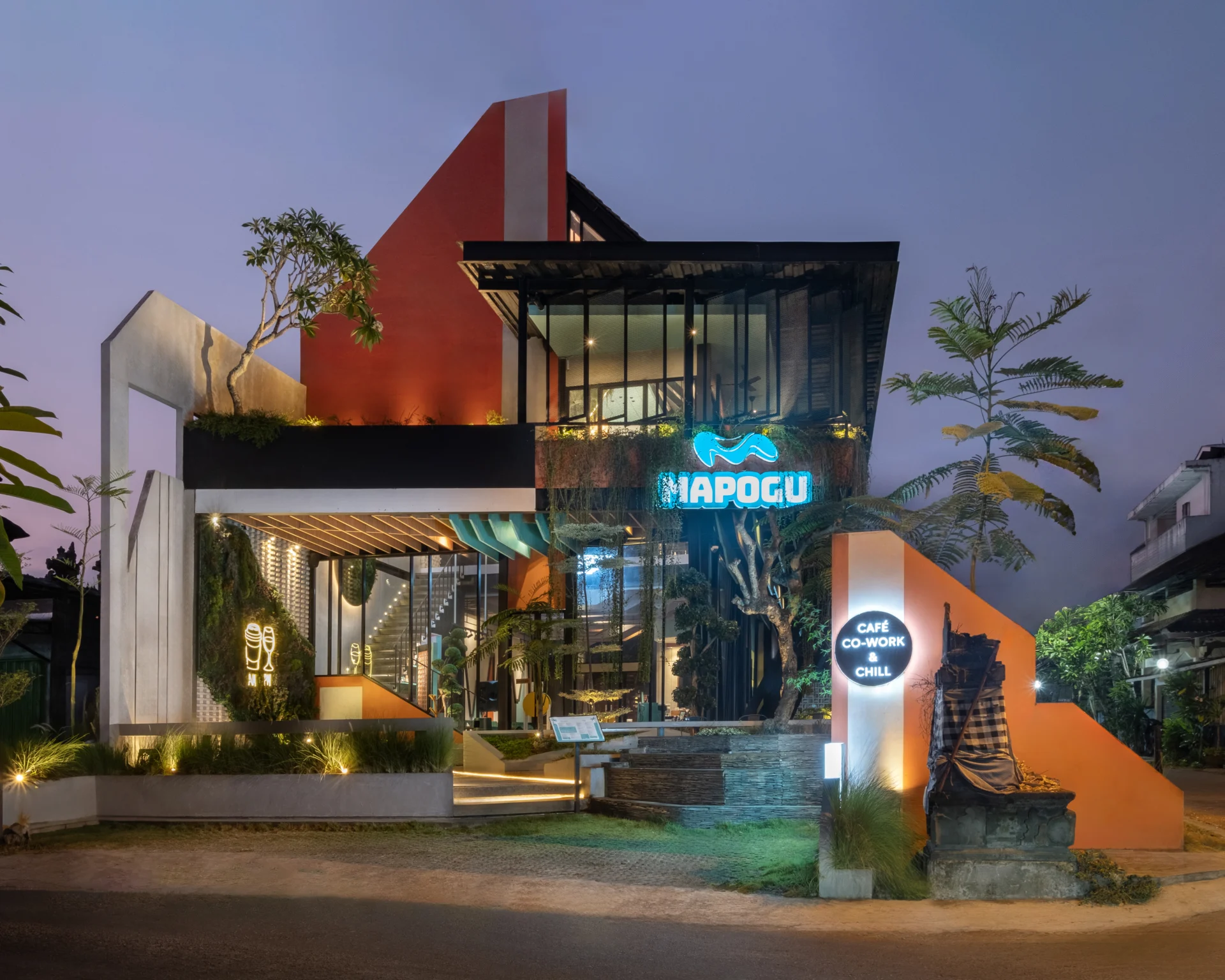
This broader project gallery shows consistent attention to materiality, passive climate strategies, and layouts that prioritize both brand expression and user comfort.
For more examples of our completed works and concept pieces, see our studio’s project pages and social portfolio here.
Manon Design Studio - the Expert in Modern Design Rooted in Nature
Based in Bali and founded by architect Brahasata Indra in 2014, Manon Design Studio bridges tradition and contemporary practice. The studio’s mantra — “Nature Inspired, Brand Defined” — explains our approach: Design must respond to place and client identity.
Manon’s portfolio includes boutique cafés, minimalist villas, adaptive commercial spaces, and hospitality projects that show how sensitive planning can be both beautiful and functional.
But, here is the thing: why is collaborating with Manon the right choice for your building or property?
1. Sustainability and Local Responsiveness
The story of the shophouse design today begins with a return to what has always worked. Older passive strategies — deep overhangs, natural ventilation, thoughtful shading — quietly align with our modern sustainability goals.
Add green roofs, rainwater systems, and local materials, and the design becomes not only efficient but deeply rooted in place.
This is why Manon consistently leans into material honesty and landscape integration: To create spaces that feel at home in Bali’s tropical climate while remaining environmentally responsible.
2. Cultural and Climatic Adaptation
As our cities evolve, the shophouse typology continues to adapt with them. Its rhythm, scale, and openness allow it to blend seamlessly into Bali’s cultural fabric, maintaining character without feeling outdated.
The balance between cultural cues and climate-responsive detailing creates a design that is both familiar and fresh — a modern expression that still respects where it comes from.
Also Read: Bali’s Best Natural Materials Interior Design Trends
3. Design Considerations for Developers
For developers, the journey starts with clarity: Understanding the project’s purpose, market, and brand. From there, early collaboration with designers shapes whether heritage elements should be preserved or thoughtfully reinterpreted.
When supported by adaptable infrastructure — efficient service cores, generous openings, and modular interiors — the result is a future-ready asset that can grow, shift, and evolve as market demands change.
In this way, the shophouse design becomes more than a building; it becomes a long-term, flexible investment.
Also Read: How Story Driven Design Property Enhances Real Estate Value
Shophouse design is more than nostalgia; it’s a resilient typology that offers practical solutions for density, climate responsiveness, and mixed-use vitality. For projects in Bali and beyond that require thoughtful adaptation of these principles, Manon Design Studio brings proven experience, a nature-centered design language, and a portfolio of hospitality and commercial work that demonstrates real-world application.
Visit our portfolio or contact Manon Design Studio for a consultation — let our team shape a project that is sustainable, site-responsive, and unmistakably yours.